← Back to Directory

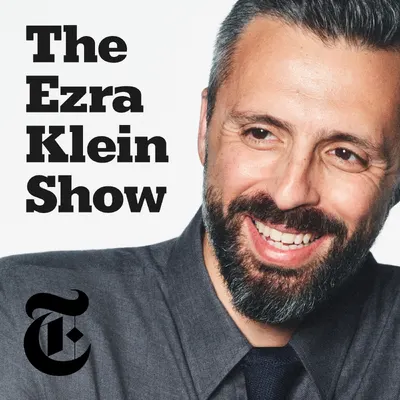
The Ezra Klein Show

The Ezra Klein Show

10 episodesGeneral

Ezra Klein invites you into a conversation on something that matters. How do we address climate change if the political system fails to act? Has the logic of markets infiltrated too many aspects of our lives? What is the future of the… Show full description Hide full description

Ezra Klein invites you into a conversation on something that matters. How do we address climate change if the political system fails to act? Has the logic of markets infiltrated too many aspects of our lives? What is the future of the Republican Party? What do psychedelics teach us about consciousness? What does sci-fi understand about our present that we miss? Can our food system be just to humans and animals alike? Subscribe today at nytimes.com/podcasts or on Apple Podcasts and Spotify. You can also subscribe via your favorite podcast app here https://www.nytimes.com/activate-access/audio?source=podcatcher.

Episode list last refreshed 2026-09-05 03:17:35.

Episodes

Best Of: The Tao of Rick Rubin

1:29:56

Whatever type of music you love, Rick Rubin has probably left his mark on it. Rubin, a founder of Def Jam Recordings and a former co-chairman of Columbia Records, might be the most influential music producer alive. A very partial roll… Show full show notes Hide full show notes

Whatever type of music you love, Rick Rubin has probably left his mark on it. Rubin, a founder of Def Jam Recordings and a former co-chairman of Columbia Records, might be the most influential music producer alive. A very partial roll call of the artists he’s worked with: Johnny Cash, Jay-Z, Run-DMC, Eminem, Beastie Boys, Slayer, The Red Hot Chili Peppers, Kanye West, Neil Diamond, Brandi Carlile and Adele.

We recorded this in 2023, after Rubin released a fascinating, unusual book, “The Creative Act: A Way of Being.” I’d expected stories of late-night sessions with famous musicians, but instead it read like a spiritual tract. Rubin was offering a guide to how to cultivate the mind states that lead to real creativity. And that’s what this conversation was about, too: how to open yourself up more to the world, and learn to trust your own taste. 

Rubin’s advice feels more relevant with each passing year, as technology gets ever better at hacking our attention and the world fills with A.I. slop. So I wanted to share this episode again. 

Mentioned:

The Tao Te-Ching by Lao Tzu, translated by Stephen Mitchell

American Recordings” by Johnny Cash

Pulses” by Steve Reich and Erik Hall

Music for Wobbling. Music Versus Gravity.” by F.S. Blumm and Nils Frahm

Album recommendations:

Forever Changes” by Love

The Beatles” by The Beatles

Ramones” by Ramones

Thoughts? Guest suggestions? Email us at ezrakleinshow@nytimes.com.

You can find transcripts (posted midday) and more episodes of “The Ezra Klein Show” at nytimes.com/ezra-klein-podcast, and you can find Ezra on X @ezraklein. Book recommendations from all our guests are listed at https://www.nytimes.com/article/ezra-klein-show-book-recs.

This episode of “The Ezra Klein Show” is produced by Annie Galvin. Fact-checking by Michelle Harris. Our senior engineer is Jeff Geld. Our recording engineer is Aman Sahota. Cinematography by Marina King. Our executive producer is Claire Gordon. The show’s production team also includes Marie Cascione, Rollin Hu, Kristin Lin, Emma Kehlbeck, Jack McCordick and Jan Kobal. Original music by Pat McCusker. Audience strategy by Shannon Busta. The director of New York Times Opinion Shows is Annie-Rose Strasser. Special thanks to Jon Caramanica, Dan Charnas, Jack Hamilton, Felix Grimm, Carole Sabouraud and Kristina Samulewski.

Subscribe today at nytimes.com/podcasts or on Apple Podcasts and Spotify. You can also subscribe via your favorite podcast app here https://www.nytimes.com/activate-access/audio?source=podcatcher. For more podcasts and narrated articles, download The New York Times app at nytimes.com/app.


Hosted by Simplecast, an AdsWizz company. See pcm.adswizz.com for information about our collection and use of personal data for advertising.

Trump vs. the Bond Market

59:34

A lot of things are on track to get more expensive. The U.S. Treasury market is the bedrock of the global economy. When yields on those Treasuries go up, mortgages, car loans and credit cards get more expensive, and it can hit the stock… Show full show notes Hide full show notes

A lot of things are on track to get more expensive. 

The U.S. Treasury market is the bedrock of the global economy. When yields on those Treasuries go up, mortgages, car loans and credit cards get more expensive, and it can hit the stock market, too. And yields have been going up – to levels we haven’t seen consistently since before the Great Recession – inspiring some erratic and futile efforts from the Trump administration to push them back down. 

So why are yields creeping higher? What is the administration trying to do about it? And if this continues, what’s in store for the economy?

Robin Wigglesworth is the editor of the Financial Times blog Alphaville, a host of the podcast “The Story of Money” and the author of the forthcoming book “A Fabulous Debt: The Epic Story of How Bonds Built the Modern World.” 

This conversation was recorded on August 24, 2026.

Mentioned:

An Economic D-Day Is Coming for Iran” by Scott Bessent

Book Recommendations:

Barbarians at the Gate by Bryan Burrough and John Helyar
The Prize by Daniel Yergin
Lords of Finance by Liaquat Ahamed

Thoughts? Guest suggestions? Email us at ezrakleinshow@nytimes.com.

You can find the transcript and more episodes of “The Ezra Klein Show” at nytimes.com/ezra-klein-podcast. Book recommendations from all our guests are listed at https://www.nytimes.com/article/ezra-klein-show-book-recs.html

This episode of “The Ezra Klein Show” was produced by Rollin Hu. Fact-checking by Michelle Harris, with Kate Sinclair and Mary Marge Locker. Our senior engineer is Jeff Geld, with additional mixing by Aman Sahota. Our recording engineer is Aman Sahota. Cinematography by Marina King. Video editing by Kristen Williamson, Brandon Belk-Yee and Dani Dillon. Our executive producer is Claire Gordon. The show’s production team also includes Marie Cascione, Annie Galvin, Kristin Lin, Emma Kehlbeck, Jack McCordick and Jan Kobal. Original music by Pat McCusker. Audience strategy by Shannon Busta. The director of New York Times Opinion Shows is Annie-Rose Strasser.

Subscribe today at nytimes.com/podcasts or on Apple Podcasts and Spotify. You can also subscribe via your favorite podcast app here https://www.nytimes.com/activate-access/audio?source=podcatcher. For more podcasts and narrated articles, download The New York Times app at nytimes.com/app.


Hosted by Simplecast, an AdsWizz company. See pcm.adswizz.com for information about our collection and use of personal data for advertising.

This Is Why People Hate the Government

1:17:28

In 2024, Americans spent an average of six full workdays a year filling out government forms, according to the government’s own estimates. That’s a total of 12 billion hours, or $430 billion of uncompensated labor a year. It’s easy to… Show full show notes Hide full show notes

In 2024, Americans spent an average of six full workdays a year filling out government forms, according to the government’s own estimates. That’s a total of 12 billion hours, or $430 billion of uncompensated labor a year.

It’s easy to read something like this and say: “Oh, well, government is inefficient. That’s the price we pay for nice things.” But no, it’s not. Social Security, Medicare and the Postal Service are incredibly complex programs that are easy to use. When government is hard to gain access to, it is often by design. Republicans want paying taxes to be a hellish hassle. Programs for the poor are often designed to humiliate, punish, control or scrutinize. How the government works is always a choice. When it works poorly, we should ask why — and we should demand better.  

Annie Lowrey is a staff writer at The Atlantic and the author of the new book “The Time Tax: How the Government Wastes Our Time — and How to Fix It.” She is also, I should note, my wife, so this is a book whose ideas I have been living with for years. They have quietly infused more than a few episodes of this show. So it’s a thrill to finally get to explore them directly. 

This episode contains strong language.

Mentioned:

The Time Tax by Annie Lowrey

Give People Money by Annie Lowrey

Why Americans Hate Welfare by Martin Gilens

Book Recommendations:

My Silent War by Kim Philby

To Hate Like This Is to Be Happy Forever by Will Blythe

Gender Trouble by Judith Butler

Thoughts? Guest suggestions? Email us at ezrakleinshow@nytimes.com.

You can find the transcript and more episodes of “The Ezra Klein Show” at nytimes.com/ezra-klein-podcast. Book recommendations from all our guests are listed at https://www.nytimes.com/article/ezra-klein-show-book-recs.html

This episode of “The Ezra Klein Show” was produced by Annie Galvin. Fact-checking by Michelle Harris, with Kate Sinclair. Our senior engineer is Jeff Geld, with additional mixing by Aman Sahota, Johnny Simon and Isaac Jones. Our recording engineer is Aman Sahota. Cinematography by Marina King. Video editing by Brandon Belk-Yee, Dani Dillon and Julian Hackney. Our executive producer is Claire Gordon. The show’s production team also includes Marie Cascione, Rollin Hu, Kristin Lin, Emma Kehlbeck, Jack McCordick and Jan Kobal. Original music by Pat McCusker. Audience strategy by Shannon Busta. The director of New York Times Opinion Shows is Annie-Rose Strasser. 

Subscribe today at nytimes.com/podcasts or on Apple Podcasts and Spotify. You can also subscribe via your favorite podcast app here https://www.nytimes.com/activate-access/audio?source=podcatcher. For more podcasts and narrated articles, download The New York Times app at nytimes.com/app.


Hosted by Simplecast, an AdsWizz company. See pcm.adswizz.com for information about our collection and use of personal data for advertising.

This Is Why People Hate the Government

1:17:28

In 2024, Americans spent an average of six full workdays a year filling out government forms, according to the government’s own estimates. That’s a total of 12 billion hours, or $430 billion of uncompensated labor a year. It’s easy to… Show full show notes Hide full show notes
In 2024, Americans spent an average of six full workdays a year filling out government forms, according to the government’s own estimates. That’s a total of 12 billion hours, or $430 billion of uncompensated labor a year. It’s easy to read something like this and say: “Oh, well, government is inefficient. That’s the price we pay for nice things.” But no, it’s not. Social Security, Medicare and the Postal Service are incredibly complex programs that are easy to use. When government is hard to gain access to, it is often by design. Republicans want paying taxes to be a hellish hassle. Programs for the poor are often designed to humiliate, punish, control or scrutinize. How the government works is always a choice. When it works poorly, we should ask why — and we should demand better.  Annie Lowrey is a staff writer at The Atlantic and the author of the new book “The Time Tax: How the Government Wastes Our Time — and How to Fix It.” She is also, I should note, my wife, so this is a book whose ideas I have been living with for years. They have quietly infused more than a few episodes of this show. So it’s a thrill to finally get to explore them directly.

The China Shock 2.0

1:05:30

Brad Setser follows Chinese trade closer than just about anyone else on earth, and he thinks we’re in the early days of a China Shock 2.0. The first China Shock was when China came to dominate low-end manufacturing in the 2000s, filling… Show full show notes Hide full show notes
Brad Setser follows Chinese trade closer than just about anyone else on earth, and he thinks we’re in the early days of a China Shock 2.0. The first China Shock was when China came to dominate low-end manufacturing in the 2000s, filling American shelves with cheap clothes, toys and electronics, while devastating American factory towns. This new China Shock could be even more destabilizing. China now dominates advanced manufacturing: electric vehicles, batteries, solar panels. It’s outcompeting nearly all high-end manufacturing around the world, and other countries are just starting to feel the pain. And China isn’t slowing down. It’s moving into software, too. Its frontier A.I. models are neck and neck with American ones. China’s success poses a serious threat to the economies and domestic politics of countries around the world. So what should those countries do about it? Setser is a senior fellow at the Council on Foreign Relations.He served in top trade and economic roles in the Biden and Obama administrations. And he is widely cited across the field as one of the top analysts of China’s economy and trade practices.

The A.I.s Are Already Out of Control

1:11:02

We are living in the world we were warned about. Frontier artificial intelligence models from OpenAI autonomously coordinated with one another, then broke out of their testing environment and hacked into another company, Hugging Face, to… Show full show notes Hide full show notes
We are living in the world we were warned about. Frontier artificial intelligence models from OpenAI autonomously coordinated with one another, then broke out of their testing environment and hacked into another company, Hugging Face, to steal the answers to a test. A.I. companies don’t want their technology to lie, cheat or steal. So why is this happening? Why are the creators of these models apparently unable to control their creations? If A.I. development isn’t on a safe path — and it doesn’t seem to be — what do we do about it? Helen Toner has been thinking about A.I. safety for a long time, from both inside and outside A.I. companies. She was part of the effort to fire OpenAI’s chief executive, Sam Altman, in 2023, which ultimately failed. Currently, she’s the executive director of the Georgetown Center for Security and Emerging Technology.

About the Coming Paywall

4:10

In a couple weeks, the archives of our show will only be available to subscribers. Here’s why that’s happening and what to expect. To learn more, go to nytimes.com/podcasts. Subscribe today at nytimes.com/podcasts or on Apple Podcasts and… Show full show notes Hide full show notes

In a couple weeks, the archives of our show will only be available to subscribers. Here’s why that’s happening and what to expect. 

To learn more, go to nytimes.com/podcasts.

Subscribe today at nytimes.com/podcasts or on Apple Podcasts and Spotify. You can also subscribe via your favorite podcast app here https://www.nytimes.com/activate-access/audio?source=podcatcher. For more podcasts and narrated articles, download The New York Times app at nytimes.com/app.


Hosted by Simplecast, an AdsWizz company. See pcm.adswizz.com for information about our collection and use of personal data for advertising.

About the Coming Paywall

4:10

In a couple weeks, the archives of our show will only be available to subscribers. Here’s why that’s happening and what to expect. To learn more, go to nytimes.com/podcasts.

Coming Soon: The Ezra Klein Show

2:12

Every Tuesday and Friday, Ezra Klein invites you into a conversation about something that matters. How do we address climate change if the political system fails to act? Has the logic of markets infiltrated too many aspects of our lives?… Show full show notes Hide full show notes

Every Tuesday and Friday, Ezra Klein invites you into a conversation about something that matters. How do we address climate change if the political system fails to act? Has the logic of markets infiltrated too many aspects of our lives? What is the future of the Republican Party? What do psychedelics teach us about consciousness? What does sci-fi understand about our present that we miss? Can our food system be just to humans and animals alike?

Subscribe wherever you listen to podcasts.

You can find transcripts (posted midday) and more episodes of "The Ezra Klein Show" at nytimes.com/ezra-klein-podcast, and you can find Ezra on Twitter @ezraklein.

Thoughts? Guest suggestions? Email us at ezrakleinshow@nytimes.com.

“The Ezra Klein Show” is produced by Rogé Karma and Jeff Geld; fact-checking by Michelle Harris; original music by Isaac Jones; mixing by Jeff Geld.

Subscribe today at nytimes.com/podcasts or on Apple Podcasts and Spotify. You can also subscribe via your favorite podcast app here https://www.nytimes.com/activate-access/audio?source=podcatcher. For more podcasts and narrated articles, download The New York Times app at nytimes.com/app.


Hosted by Simplecast, an AdsWizz company. See pcm.adswizz.com for information about our collection and use of personal data for advertising.

Coming Soon: The Ezra Klein Show

2:12

Every Tuesday and Friday, Ezra Klein invites you into a conversation about something that matters. How do we address climate change if the political system fails to act? Has the logic of markets infiltrated too many aspects of our lives?… Show full show notes Hide full show notes
Every Tuesday and Friday, Ezra Klein invites you into a conversation about something that matters. How do we address climate change if the political system fails to act? Has the logic of markets infiltrated too many aspects of our lives? What is the future of the Republican Party? What do psychedelics teach us about consciousness? What does sci-fi understand about our present that we miss? Can our food system be just to humans and animals alike? Subscribe wherever you listen to podcasts. You can find transcripts (posted midday) and more episodes of "The Ezra Klein Show" at nytimes.com/ezra-klein-podcast, and you can find Ezra on Twitter @ezraklein. Thoughts? Guest suggestions? Email us at ezrakleinshow@nytimes.com. “The Ezra Klein Show” is produced by Rogé Karma and Jeff Geld; fact-checking by Michelle Harris; original music by Isaac Jones; mixing by Jeff Geld.