← Back to Directory

Right About Now - Legendary Business Advice

Right About Now - Legendary Business Advice

50 episodesGeneral

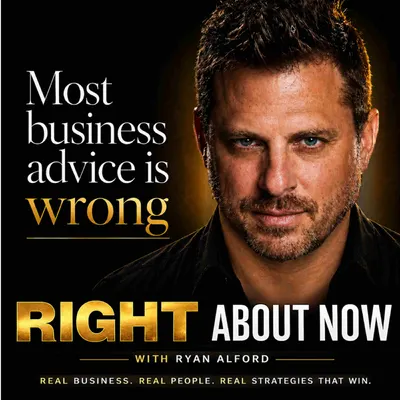
The #1 Marketing & Business Show on Apple Podcasts Welcome to Right About Now, where real American business gets a megaphone—and the B.S. gets the boot. Hosted by marketing disrupter Ryan Alford, entrepreneur, founder, and the guy brands… Show full description Hide full description

The #1 Marketing & Business Show on Apple Podcasts Welcome to Right About Now, where real American business gets a megaphone—and the B.S. gets the boot. Hosted by marketing disrupter Ryan Alford, entrepreneur, founder, and the guy brands call when they want attention, this show slices through the noise with uncensored insights, hard-earned wisdom, and straight-up truths from the frontlines of business. Every week, you’ll get two punchy Guest episodes where Ryan talks with legendary business founders, trending authors, and industry titans about what it takes to build a business and some of the most cutting edge tools and services available. Forget the LinkedIn fluff. This is for doers, builders, and dreamers who want results, not recycled soundbites. Business the way it really works. Real people. Real wins. Real screw-ups. No MBA required. Just guts, hustle, and a sense of humor. Subscribe, listen, and get Right About Now. Because business isn’t broken—it’s just been boring & stale. Until now.

Episode list last refreshed 2026-09-05 03:17:14.

Episodes

From Broke to Six Figures and Back: Jason Brown on Options Trading, Risk and Rebuilding Wealth

21:22

Jason Brown grew up sleeping in sleeping bags, entered the stock market with $500, and eventually transformed a $10,000 student loan into a six-figure trading account. After one emotional trade wiped out approximately $250,000, he was… Show full show notes Hide full show notes
Jason Brown grew up sleeping in sleeping bags, entered the stock market with $500, and eventually transformed a $10,000 student loan into a six-figure trading account. After one emotional trade wiped out approximately $250,000, he was forced to move home and rebuild his finances and investment strategy from the beginning. On Right About Now, The Brown Report founder and Five-Year Millionaire author joins Ryan Alford to explain how that failure reshaped his approach to risk, options trading, and wealth accumulation. Together, Ryan and Jason discuss financial advisors, stock charts, paper trading, financial literacy, and the importance of knowing when to exit a losing position. Jason also outlines his Five-Year Millionaire framework while emphasizing the education, practice, and discipline required before risking real money. This episode is for educational purposes only and should not be considered financial advice. TOPICS COVERED Jason Brown’s childhood and early interest in wealth Losing most of his first professionally managed investment Making his first $100 trading Sprint stock Growing a student loan into a six-figure account The trade that wiped out approximately $250,000 Greed, ego, and emotional investing Risk management and predetermined exit points Stock charts, fundamentals, and market patterns Using options for leverage and portfolio protection Paper trading and practicing with realistic amounts Evaluating financial advisors and investment funds The Five-Year Millionaire wealth-building framework Teaching financial literacy at an earlier age CONNECT WITH JASON BROWN The Brown Report: https://thebrownreport.com/ Free Trading Resources: https://thebrownreport.com/account/ Five-Year Millionaire: https://fiveyearmillionaire.com/ Power Trades University: https://powertradesuniversity.com/ Instagram: https://www.instagram.com/brownreport/ LinkedIn: https://www.linkedin.com/in/jasonbrown1124/ CONNECT WITH RYAN ALFORD AND RIGHT ABOUT NOW Right About Now: https://www.ryanisright.com/ Ryan Alford: https://www.ryanalford.com/ Instagram: https://www.instagram.com/ryanalford/ YouTube: https://www.youtube.com/@RightAboutNowwithRyanAlford

How Earned Media Gets Your Business Recommended by AI with Brett Farmiloe

19:56

Brett Farmiloe built Featured after seeing small-business owners with deep expertise but no reliable way to get quoted by the media. He joins Ryan Alford to discuss earned media, digital PR, AI search visibility, and the revival of Help a… Show full show notes Hide full show notes
Brett Farmiloe built Featured after seeing small-business owners with deep expertise but no reliable way to get quoted by the media. He joins Ryan Alford to discuss earned media, digital PR, AI search visibility, and the revival of Help a Reporter Out. They explain how media citations may influence LLM recommendations, why AI is compressing the marketing funnel, and why a single high-profile feature rarely produces instant revenue. Brett also shares how Featured and HARO connect journalists with verified experts while giving publishers greater control over AI-generated responses. The conversation offers a realistic strategy for building authority, earning backlinks, reaching customers, and becoming more visible across traditional search and AI platforms. TOPICS COVERED Brett Farmiloe’s journey from agency owner to Featured founder The difference between paid media and earned media How businesses can earn credible media coverage AI search optimization, AEO, and GEO Getting cited and recommended by large language models How ChatGPT is changing the customer journey Why PR results are difficult to measure Consistency, quality, and quantity in media outreach The acquisition and relaunch of Help a Reporter Out Connecting journalists with verified expert sources Using AI without removing human expertise Free and paid ways to begin using Featured and HARO CONNECT WITH BRETT FARMILOE Featured: https://featured.com/ Help a Reporter Out: https://www.helpareporter.com/ Brett on LinkedIn: https://www.linkedin.com/in/brettfarmiloe Brett on X: https://x.com/BrettFarmiloe CONNECT WITH RYAN ALFORD AND RIGHT ABOUT NOW Right About Now: https://www.ryanisright.com/ Ryan Alford: https://www.ryanalford.com/ Ryan on Instagram: https://www.instagram.com/ryanalford/ Ryan on LinkedIn: https://www.linkedin.com/in/ryan-alford/ Apple Podcasts: https://podcasts.apple.com/us/podcast/right-about-now-legendary-business-advice/id1346054199 Spotify: https://open.spotify.com/show/0gy9HkTiwpAAgu1DFyIW9h YouTube: https://www.youtube.com/@RightAboutNowwithRyanAlford

How Mercedes-Benz, Marriott, and TIGER 21 Build Brand Loyalty | Lisa Holladay

23:37

Lisa Holladay has spent her career building loyalty for Mercedes-Benz, The Ritz-Carlton, St. Regis, and now TIGER 21. She joins Ryan Alford to explain how intentional customer experience turns transactions into lasting relationships and… Show full show notes Hide full show notes
Lisa Holladay has spent her career building loyalty for Mercedes-Benz, The Ritz-Carlton, St. Regis, and now TIGER 21. She joins Ryan Alford to explain how intentional customer experience turns transactions into lasting relationships and why product quality alone cannot create brand love. Their conversation covers customer journey mapping, experiential marketing, surprise-and-delight moments, community building, and the challenge of creating meaningful value for ultra-high-net-worth members. Lisa also takes Ryan inside TIGER 21’s peer-learning model, where entrepreneurs and executives connect around investing, family, philanthropy, health, and life after a major business exit. Lisa and Ryan discuss what changed when she moved from global corporations with massive sponsorship budgets to an entrepreneurial organization where ideas can be tested quickly and leaders are trusted to take risks. TOPICS COVERED Lisa Holladay’s career at Mercedes-Benz and Marriott Building luxury customer experiences The relationship between brand love and customer loyalty Why a strong product is only one part of retention Designing an intentional customer journey Creating memorable experiential marketing Building communities instead of customer lists TIGER 21’s peer-to-peer learning model Serving entrepreneurs after a major liquidity event Connecting wealth, family, philanthropy, and purpose Maintaining engagement through digital and in-person experiences Creating an entrepreneurial culture inside a growing organization CONNECT WITH LISA HOLLADAY TIGER 21: https://tiger21.com/ Lisa on LinkedIn: https://www.linkedin.com/in/lisaholladay01 Lisa on Instagram: https://www.instagram.com/holladaytime/ CONNECT WITH RYAN ALFORD AND RIGHT ABOUT NOW Right About Now: https://www.ryanisright.com/ Ryan Alford: https://www.ryanalford.com/ Ryan on Instagram: https://www.instagram.com/ryanalford/ Ryan on LinkedIn: https://www.linkedin.com/in/ryan-alford/ Apple Podcasts: https://podcasts.apple.com/us/podcast/right-about-now-legendary-business-advice/id1346054199 Spotify: https://open.spotify.com/show/0gy9HkTiwpAAgu1DFyIW9h YouTube: https://www.youtube.com/@RightAboutNowwithRyanAlford

$50M at 20% Profit Beats $100M at 5% Every Time

29:24

Yarin Gaon started his first company at 14, built and sold Israel’s largest military-goods e-commerce platform, and now helps founder-led businesses make smarter decisions about growth. On Right About Now, he joins Ryan Alford to explain… Show full show notes Hide full show notes
Yarin Gaon started his first company at 14, built and sold Israel’s largest military-goods e-commerce platform, and now helps founder-led businesses make smarter decisions about growth. On Right About Now, he joins Ryan Alford to explain why so many companies stall after reaching $1 million to $5 million in revenue and how “growth by subtraction” can improve profitability. Their conversation covers profit mapping, unprofitable bestsellers, ideal customer profiles, leadership alignment, and the hidden risks of building custom technology. Yarin also explains why entrepreneurs should establish predictable cash flow before raising outside capital and why keeping equity can matter more than chasing a bigger revenue number. This episode offers a practical framework for business owners who want stronger margins, fewer distractions, and a company that actually pays them more. TOPICS COVERED Starting a software business at 14 Building and selling an Israeli e-commerce company Why custom-built technology can hurt a business exit The difference between revenue, profit, and EBITDA Why founder-led companies stall between $1 million and $5 million Growth by addition versus growth by subtraction Finding negative-margin products through profit mapping The plumbing company whose popular service lost hundreds of thousands Identifying the right customers, offers, and marketing channels Why hustle and operational systems are not substitutes for strategy Bootstrapping versus raising venture capital Preserving founder equity while building a profitable business CONNECT WITH YARIN GAON Fractional Partners: https://www.fractional.partners/ Growth Decisions Canvas: https://canvas.fractional.partners/ Growth Bottleneck Snapshot: https://snapshot.fractional.partners/ Free Profit Map: https://www.fractional.partners/free-tools/profit-map LinkedIn: https://www.linkedin.com/in/yaringaon/ CONNECT WITH RYAN ALFORD AND RIGHT ABOUT NOW Right About Now: https://www.ryanisright.com/ Ryan Alford: https://www.ryanalford.com/ Instagram: https://www.instagram.com/ryanalford/ LinkedIn: https://www.linkedin.com/in/ryan-alford/ YouTube: https://www.youtube.com/@RightAboutNowwithRyanAlford

Why Is Your Best-Selling Product Losing You Money?

29:24

Yarin Gaon started his first company at 14, built and sold Israel’s largest military-goods e-commerce platform, and now helps founder-led businesses make smarter decisions about growth. On Right About Now, he joins Ryan Alford to explain… Show full show notes Hide full show notes
Yarin Gaon started his first company at 14, built and sold Israel’s largest military-goods e-commerce platform, and now helps founder-led businesses make smarter decisions about growth. On Right About Now, he joins Ryan Alford to explain why so many companies stall after reaching $1 million to $5 million in revenue and how “growth by subtraction” can improve profitability. Their conversation covers profit mapping, unprofitable bestsellers, ideal customer profiles, leadership alignment, and the hidden risks of building custom technology. Yarin also explains why entrepreneurs should establish predictable cash flow before raising outside capital and why keeping equity can matter more than chasing a bigger revenue number. This episode offers a practical framework for business owners who want stronger margins, fewer distractions, and a company that actually pays them more. TOPICS COVERED Starting a software business at 14 Building and selling an Israeli e-commerce company Why custom-built technology can hurt a business exit The difference between revenue, profit, and EBITDA Why founder-led companies stall between $1 million and $5 million Growth by addition versus growth by subtraction Finding negative-margin products through profit mapping The plumbing company whose popular service lost hundreds of thousands Identifying the right customers, offers, and marketing channels Why hustle and operational systems are not substitutes for strategy Bootstrapping versus raising venture capital Preserving founder equity while building a profitable business CONNECT WITH YARIN GAON Fractional Partners: https://www.fractional.partners/ Growth Decisions Canvas: https://canvas.fractional.partners/ Growth Bottleneck Snapshot: https://snapshot.fractional.partners/ Free Profit Map: https://www.fractional.partners/free-tools/profit-map LinkedIn: https://www.linkedin.com/in/yaringaon/ CONNECT WITH RYAN ALFORD AND RIGHT ABOUT NOW Right About Now: https://www.ryanisright.com/ Ryan Alford: https://www.ryanalford.com/ Instagram: https://www.instagram.com/ryanalford/ LinkedIn: https://www.linkedin.com/in/ryan-alford/ YouTube: https://www.youtube.com/@RightAboutNowwithRyanAlford

The Self-Made Millionaire: Why Struggle Was His Greatest Advantage

34:03

Before founding Global Processing Systems, Moses Heredia worked crop fields with his immigrant mother, entered merchant services at $4.25 an hour, and survived a period when he could not afford basic utilities. One Spanish-language sales… Show full show notes Hide full show notes
Before founding Global Processing Systems, Moses Heredia worked crop fields with his immigrant mother, entered merchant services at $4.25 an hour, and survived a period when he could not afford basic utilities. One Spanish-language sales appointment showed him what commission could unlock; after becoming a top performer and rising through management, he walked away from an executive track to build his own company. On Right About Now, Ryan Alford asks Moses what actually sustained that climb, from fierce competition and disciplined selling to honest relationships and customer-first leadership. They discuss starting from a pickup truck, taking the first financial hit as CEO, protecting employees during economic crises, and building a culture that keeps people for decades. Moses also shares why faith, service, and helping others advance matter more to him than the number in his bank account. TOPICS COVERED Moses Heredia’s immigrant family and agricultural upbringing Discipline, faith, competition, and the desire to win Entering the merchant-services industry Learning to sell on commission Identifying an underserved Spanish-speaking market Founding and scaling Global Processing Systems Human customer service in the payment-processing industry Servant leadership and the inverted-pyramid model Creating long-term employee loyalty Leading through recessions and the pandemic Honesty and accountability in business Redefining wealth, leadership, and success CONNECT WITH MOSES HEREDIA Official website: https://www.mosesheredia.com/ Fields to Fortune: https://www.mosesheredia.com/book Buy the book on Amazon: https://www.amazon.com/dp/B0F84H46R8 Global Processing Systems: https://globalprocessingsystems.com/ Instagram: https://www.instagram.com/mosesheredia_/ LinkedIn: https://www.linkedin.com/in/moses-heredia-17390098/ CONNECT WITH RYAN ALFORD AND RIGHT ABOUT NOW Right About Now: https://www.ryanisright.com/ Ryan Alford: https://www.ryanalford.com/ Instagram: https://www.instagram.com/ryanalford/ LinkedIn: https://www.linkedin.com/in/ryan-alford/ YouTube: https://www.youtube.com/@RightAboutNowwithRyanAlford

The Self-Made Millionaire: Why Struggle Was His Greatest Advantage

34:03

Before founding Global Processing Systems, Moses Heredia worked crop fields with his immigrant mother, entered merchant services at $4.25 an hour, and survived a period when he could not afford basic utilities. One Spanish-language sales… Show full show notes Hide full show notes
Before founding Global Processing Systems, Moses Heredia worked crop fields with his immigrant mother, entered merchant services at $4.25 an hour, and survived a period when he could not afford basic utilities. One Spanish-language sales appointment showed him what commission could unlock; after becoming a top performer and rising through management, he walked away from an executive track to build his own company. On Right About Now, Ryan Alford asks Moses what actually sustained that climb, from fierce competition and disciplined selling to honest relationships and customer-first leadership. They discuss starting from a pickup truck, taking the first financial hit as CEO, protecting employees during economic crises, and building a culture that keeps people for decades. Moses also shares why faith, service, and helping others advance matter more to him than the number in his bank account. TOPICS COVERED Moses Heredia’s immigrant family and agricultural upbringing Discipline, faith, competition, and the desire to win Entering the merchant-services industry Learning to sell on commission Identifying an underserved Spanish-speaking market Founding and scaling Global Processing Systems Human customer service in the payment-processing industry Servant leadership and the inverted-pyramid model Creating long-term employee loyalty Leading through recessions and the pandemic Honesty and accountability in business Redefining wealth, leadership, and success CONNECT WITH MOSES HEREDIA Official website: https://www.mosesheredia.com/ Fields to Fortune: https://www.mosesheredia.com/book Buy the book on Amazon: https://www.amazon.com/dp/B0F84H46R8 Global Processing Systems: https://globalprocessingsystems.com/ Instagram: https://www.instagram.com/mosesheredia_/ LinkedIn: https://www.linkedin.com/in/moses-heredia-17390098/ CONNECT WITH RYAN ALFORD AND RIGHT ABOUT NOW Right About Now: https://www.ryanisright.com/ Ryan Alford: https://www.ryanalford.com/ Instagram: https://www.instagram.com/ryanalford/ LinkedIn: https://www.linkedin.com/in/ryan-alford/ YouTube: https://www.youtube.com/@RightAboutNowwithRyanAlford

Build a Brand That Sells: Lessons From Blue Moon, White Claw, and mōcean

23:32

Tony Vieira spent 36 years in beverage science and operations, helping Blue Moon recover from near cancellation and supporting White Claw through one of the fastest growth periods in the alcohol business. Now the former brewmaster and… Show full show notes Hide full show notes
Tony Vieira spent 36 years in beverage science and operations, helping Blue Moon recover from near cancellation and supporting White Claw through one of the fastest growth periods in the alcohol business. Now the former brewmaster and quality executive has left the corporate safety net to build mōcean drinkwerx with his son, Christian. Tony joins Ryan Alford to explain how product quality, consumer psychology, viral culture and production capacity turned two beverage brands into category leaders. They examine the risks hidden inside explosive growth, including pre-sold inventory, three enormous breweries built during COVID and excess capacity after demand peaked. Ryan and Tony also discuss building a company with family, creating an energy drink for adults and why founders must challenge the ideas they are most tempted to protect. TOPICS COVERED Tony Vieira’s 36-year beverage career Taking Blue Moon to number one in craft beer The product strategy behind Blue Moon’s drinkability White Claw’s rise and the creation of hard seltzer Consumer psychology and viral brand growth Scaling production during extreme demand The danger of overbuilding manufacturing capacity Separating pipeline fill from recurring sales Working with a family member and co-founder Developing an energy drink for adult consumers Challenging assumptions during product development Solving customer problems instead of protecting ideas CONNECT WITH TONY VIEIRA Mōcean: https://drinkmocean.energy/ Mōcean on Amazon: https://www.amazon.com/MOCEAN-Mandarin-Caffeine-Adaptogens-Sucralose/dp/B0FSDHYS4N Mōcean on Instagram: https://www.instagram.com/moceandrinkwerx/ Tony Vieira on LinkedIn: https://www.linkedin.com/in/tonyvieira1/ CONNECT WITH RYAN ALFORD Right About Now: https://www.ryanisright.com/ Ryan on Instagram: https://www.instagram.com/ryanalford/ Ryan on LinkedIn: https://www.linkedin.com/in/ryan-alford/

Build a Brand That Sells: Lessons From Blue Moon, White Claw, and mōcean

23:32

Tony Vieira spent 36 years in beverage science and operations, helping Blue Moon recover from near cancellation and supporting White Claw through one of the fastest growth periods in the alcohol business. Now the former brewmaster and… Show full show notes Hide full show notes
Tony Vieira spent 36 years in beverage science and operations, helping Blue Moon recover from near cancellation and supporting White Claw through one of the fastest growth periods in the alcohol business. Now the former brewmaster and quality executive has left the corporate safety net to build mōcean drinkwerx with his son, Christian. Tony joins Ryan Alford to explain how product quality, consumer psychology, viral culture and production capacity turned two beverage brands into category leaders. They examine the risks hidden inside explosive growth, including pre-sold inventory, three enormous breweries built during COVID and excess capacity after demand peaked. Ryan and Tony also discuss building a company with family, creating an energy drink for adults and why founders must challenge the ideas they are most tempted to protect. TOPICS COVERED Tony Vieira’s 36-year beverage career Taking Blue Moon to number one in craft beer The product strategy behind Blue Moon’s drinkability White Claw’s rise and the creation of hard seltzer Consumer psychology and viral brand growth Scaling production during extreme demand The danger of overbuilding manufacturing capacity Separating pipeline fill from recurring sales Working with a family member and co-founder Developing an energy drink for adult consumers Challenging assumptions during product development Solving customer problems instead of protecting ideas CONNECT WITH TONY VIEIRA Mōcean: https://drinkmocean.energy/ Mōcean on Amazon: https://www.amazon.com/MOCEAN-Mandarin-Caffeine-Adaptogens-Sucralose/dp/B0FSDHYS4N Mōcean on Instagram: https://www.instagram.com/moceandrinkwerx/ Tony Vieira on LinkedIn: https://www.linkedin.com/in/tonyvieira1/ CONNECT WITH RYAN ALFORD Right About Now: https://www.ryanisright.com/ Ryan on Instagram: https://www.instagram.com/ryanalford/ Ryan on LinkedIn: https://www.linkedin.com/in/ryan-alford/

Podcast Advertising Is About to Change Everything | Jeff Umbro

28:25

The podcast industry no longer looks like the creative, audio-first business it was a decade ago. Jeff Umbro, founder and CEO of The Podglomerate and host of Podcast Perspectives, joins Ryan Alford to examine the rise of video podcasting… Show full show notes Hide full show notes
The podcast industry no longer looks like the creative, audio-first business it was a decade ago. Jeff Umbro, founder and CEO of The Podglomerate and host of Podcast Perspectives, joins Ryan Alford to examine the rise of video podcasting, media consolidation, programmatic advertising and the decline of high-cost narrative shows. Jeff explains how creators can separate audience acquisition from retention, establish clearer goals and determine how much production quality actually serves the business. Drawing on his experience producing more than 700 episodes, Ryan opens up about overproduction, niche audiences and creating a show that generates relationships instead of chasing vanity metrics. Together, Ryan and Jeff offer a practical strategy for sustainable podcast growth: understand what the listener receives, diversify distribution and revenue, and avoid depending on one platform. TOPICS COVERED The evolution of the podcast industry Podcasting’s growing identity crisis Audio podcasts versus video podcasts Audience acquisition and listener retention Podcast production costs and scope creep Direct sponsorships and programmatic advertising Media consolidation and platform dependence The decline of narrative podcasting Subscription, membership and live-event revenue Building a podcast that supports business objectives CONNECT WITH JEFF UMBRO The Podglomerate: https://podglomerate.com/ Work With The Podglomerate: https://podglomerate.com/connect/ Jeff Umbro on LinkedIn: https://www.linkedin.com/in/jeffumbro/ Podcast Perspectives: https://listen.podglomerate.com/show/podcast-perspectives Podcast Perspectives on Apple Podcasts: https://podcasts.apple.com/us/podcast/podcast-perspectives/id1699652108 CONNECT WITH RYAN ALFORD Right About Now: https://www.ryanisright.com/ Ryan on Instagram: https://www.instagram.com/ryanalford/ Ryan on LinkedIn: https://www.linkedin.com/in/ryan-alford/

Podcast Advertising Is About to Change Everything | Jeff Umbro

28:25

The podcast industry no longer looks like the creative, audio-first business it was a decade ago. Jeff Umbro, founder and CEO of The Podglomerate and host of Podcast Perspectives, joins Ryan Alford to examine the rise of video podcasting… Show full show notes Hide full show notes
The podcast industry no longer looks like the creative, audio-first business it was a decade ago. Jeff Umbro, founder and CEO of The Podglomerate and host of Podcast Perspectives, joins Ryan Alford to examine the rise of video podcasting, media consolidation, programmatic advertising and the decline of high-cost narrative shows. Jeff explains how creators can separate audience acquisition from retention, establish clearer goals and determine how much production quality actually serves the business. Drawing on his experience producing more than 700 episodes, Ryan opens up about overproduction, niche audiences and creating a show that generates relationships instead of chasing vanity metrics. Together, Ryan and Jeff offer a practical strategy for sustainable podcast growth: understand what the listener receives, diversify distribution and revenue, and avoid depending on one platform. TOPICS COVERED The evolution of the podcast industry Podcasting’s growing identity crisis Audio podcasts versus video podcasts Audience acquisition and listener retention Podcast production costs and scope creep Direct sponsorships and programmatic advertising Media consolidation and platform dependence The decline of narrative podcasting Subscription, membership and live-event revenue Building a podcast that supports business objectives CONNECT WITH JEFF UMBRO The Podglomerate: https://podglomerate.com/ Work With The Podglomerate: https://podglomerate.com/connect/ Jeff Umbro on LinkedIn: https://www.linkedin.com/in/jeffumbro/ Podcast Perspectives: https://listen.podglomerate.com/show/podcast-perspectives Podcast Perspectives on Apple Podcasts: https://podcasts.apple.com/us/podcast/podcast-perspectives/id1699652108 CONNECT WITH RYAN ALFORD Right About Now: https://www.ryanisright.com/ Ryan on Instagram: https://www.instagram.com/ryanalford/ Ryan on LinkedIn: https://www.linkedin.com/in/ryan-alford/

Building a $25M Business From the Attention Economy with Dan Novaes

30:44

Mode Mobile co-founder and CEO Dan Novaes joins Ryan Alford for a conversation about entrepreneurship, business pivots and turning smartphone activity into income. Dan shares how his instinct for finding overlooked opportunities took him… Show full show notes Hide full show notes
Mode Mobile co-founder and CEO Dan Novaes joins Ryan Alford for a conversation about entrepreneurship, business pivots and turning smartphone activity into income. Dan shares how his instinct for finding overlooked opportunities took him from selling Pokémon cards as a kid to building a multimillion-dollar international electronics business before he finished college. Ryan and Dan unpack the creation of Mode Mobile, its growth from less than $100,000 in revenue to more than $25 million by 2022, and the development of an operating system that rewards people for everyday mobile activity. Dan explains why consumer attention becomes significantly more valuable when paired with action and how that relationship creates measurable value for users, advertisers and technology partners. The conversation also explores launching the EarnPhone, the challenges of entering the hardware business, the danger of pursuing growth at all costs and why Dan views the ability to pivot as his greatest entrepreneurial skill. TOPICS COVERED • Dan Novaes’ early entrepreneurial ventures • Building a $2 million business during college • The creation and growth of Mode Mobile • How EarnPhone and EarnOS work • Smartphone habits and the attention economy • How brands value consumer attention and action • Knowing when to pivot a business model • Hardware, software and licensing partnerships • Profitable growth versus growth at all costs • Mode Mobile’s future and potential IPO plans CONNECT WITH DAN NOVAES Mode Mobile: https://www.modemobile.com/ EarnPhone: https://www.modephone.com/ Mode Mobile Investment Information: https://invest.modemobile.com/ Dan Novaes on LinkedIn: https://www.linkedin.com/in/danielnovaes Mode Mobile on LinkedIn: https://www.linkedin.com/company/modemobile/ CONNECT WITH RYAN ALFORD Right About Now: https://www.ryanisright.com/ Instagram and LinkedIn: @ryanalford YouTube: https://www.youtube.com/@RightAboutNowwithRyanAlford

Building a $25M Business From the Attention Economy with Dan Novaes

30:44

Mode Mobile co-founder and CEO Dan Novaes joins Ryan Alford for a conversation about entrepreneurship, business pivots and turning smartphone activity into income. Dan shares how his instinct for finding overlooked opportunities took him… Show full show notes Hide full show notes
Mode Mobile co-founder and CEO Dan Novaes joins Ryan Alford for a conversation about entrepreneurship, business pivots and turning smartphone activity into income. Dan shares how his instinct for finding overlooked opportunities took him from selling Pokémon cards as a kid to building a multimillion-dollar international electronics business before he finished college. Ryan and Dan unpack the creation of Mode Mobile, its growth from less than $100,000 in revenue to more than $25 million by 2022, and the development of an operating system that rewards people for everyday mobile activity. Dan explains why consumer attention becomes significantly more valuable when paired with action and how that relationship creates measurable value for users, advertisers and technology partners. The conversation also explores launching the EarnPhone, the challenges of entering the hardware business, the danger of pursuing growth at all costs and why Dan views the ability to pivot as his greatest entrepreneurial skill. TOPICS COVERED • Dan Novaes’ early entrepreneurial ventures • Building a $2 million business during college • The creation and growth of Mode Mobile • How EarnPhone and EarnOS work • Smartphone habits and the attention economy • How brands value consumer attention and action • Knowing when to pivot a business model • Hardware, software and licensing partnerships • Profitable growth versus growth at all costs • Mode Mobile’s future and potential IPO plans CONNECT WITH DAN NOVAES Mode Mobile: https://www.modemobile.com/ EarnPhone: https://www.modephone.com/ Mode Mobile Investment Information: https://invest.modemobile.com/ Dan Novaes on LinkedIn: https://www.linkedin.com/in/danielnovaes Mode Mobile on LinkedIn: https://www.linkedin.com/company/modemobile/ CONNECT WITH RYAN ALFORD Right About Now: https://www.ryanisright.com/ Instagram and LinkedIn: @ryanalford YouTube: https://www.youtube.com/@RightAboutNowwithRyanAlford

How One Book Generated $7M in Sales | Selfpublishing.com with Chandler Bolt

23:50

Chandler Bolt, founder and CEO of SelfPublishing.com, joins Ryan Alford for a tactical conversation about writing, publishing, and using a book to grow a business. Chandler shares the eight milestones his team uses to move authors from an… Show full show notes Hide full show notes
Chandler Bolt, founder and CEO of SelfPublishing.com, joins Ryan Alford for a tactical conversation about writing, publishing, and using a book to grow a business. Chandler shares the eight milestones his team uses to move authors from an idea to a finished launch and explains the four Ps behind a book that connects with the right reader. Ryan pushes on the questions entrepreneurs actually care about: how much publishing costs, how long the process takes, whether self-publishing beats traditional publishing, and what kind of ROI a book can realistically create. Chandler explains how the right book can generate leads, strengthen sales conversations, increase referrals, train customers and teams, and continue producing value years after publication. The conversation also challenges the obsession with bestseller lists and makes the case that for a business owner, revenue, authority and impact are far more important metrics of success. TOPICS COVERED • Self-publishing vs. traditional publishing • Chandler Bolt’s eight publishing milestones • The MORE writing method • The four Ps of positioning a book • Publishing costs, time and ROI • Using books to generate leads and close sales • Books as authority and credibility assets • Print books vs. ebooks • Why business outcomes matter more than bestseller lists CONNECT WITH CHANDLER BOLT SelfPublishing.com: https://selfpublishing.com/ Episode Offer / Consultation: https://selfpublishing.com/writeaboutnow Instagram: https://www.instagram.com/realchandlerbolt/ LinkedIn: https://www.linkedin.com/in/chandlerbolt/ YouTube: https://www.youtube.com/@ChandlerBoltOfficial CONNECT WITH RYAN ALFORD Right About Now: https://www.ryanisright.com/ Instagram: https://www.instagram.com/ryanalford/ LinkedIn: https://www.linkedin.com/in/ryan-alford/

How One Book Generated $7M in Sales | Selfpublishing.com with Chandler Bolt

23:50

Chandler Bolt, founder and CEO of SelfPublishing.com, joins Ryan Alford for a tactical conversation about writing, publishing, and using a book to grow a business. Chandler shares the eight milestones his team uses to move authors from an… Show full show notes Hide full show notes
Chandler Bolt, founder and CEO of SelfPublishing.com, joins Ryan Alford for a tactical conversation about writing, publishing, and using a book to grow a business. Chandler shares the eight milestones his team uses to move authors from an idea to a finished launch and explains the four Ps behind a book that connects with the right reader. Ryan pushes on the questions entrepreneurs actually care about: how much publishing costs, how long the process takes, whether self-publishing beats traditional publishing, and what kind of ROI a book can realistically create. Chandler explains how the right book can generate leads, strengthen sales conversations, increase referrals, train customers and teams, and continue producing value years after publication. The conversation also challenges the obsession with bestseller lists and makes the case that for a business owner, revenue, authority and impact are far more important metrics of success. TOPICS COVERED • Self-publishing vs. traditional publishing • Chandler Bolt’s eight publishing milestones • The MORE writing method • The four Ps of positioning a book • Publishing costs, time and ROI • Using books to generate leads and close sales • Books as authority and credibility assets • Print books vs. ebooks • Why business outcomes matter more than bestseller lists CONNECT WITH CHANDLER BOLT SelfPublishing.com: https://selfpublishing.com/ Episode Offer / Consultation: https://selfpublishing.com/writeaboutnow Instagram: https://www.instagram.com/realchandlerbolt/ LinkedIn: https://www.linkedin.com/in/chandlerbolt/ YouTube: https://www.youtube.com/@ChandlerBoltOfficial CONNECT WITH RYAN ALFORD Right About Now: https://www.ryanisright.com/ Instagram: https://www.instagram.com/ryanalford/ LinkedIn: https://www.linkedin.com/in/ryan-alford/

Earn Attention, Don’t Steal It: Steve Pratt on Creative Bravery and Better Marketing

29:14

Steve Pratt joins Ryan Alford to explain why brands can no longer force people to pay attention. As the author of Earn It and co-founder of Pacific Content, Steve has spent decades studying what makes audiences willingly choose, remember… Show full show notes Hide full show notes
Steve Pratt joins Ryan Alford to explain why brands can no longer force people to pay attention. As the author of Earn It and co-founder of Pacific Content, Steve has spent decades studying what makes audiences willingly choose, remember and return to content. The conversation explores why traditional advertising metrics often reward weak marketing, how short-term thinking undermines long-term growth and why valuable content should feel like a genuine gift to its audience. Steve shares his framework for creative bravery and explains how brands can connect their expertise to content people would consume even if the company name disappeared. Ryan and Steve also discuss niche audiences, branded podcasts and the difference between paying for impressions and paying to generate an actual sample. This episode offers a practical strategy for marketers, founders and creators trying to stand out without becoming another interruption. Topics Covered Steve Pratt’s career in television, music and podcasting The creation of Pacific Content Why the traditional media and advertising model broke Earning attention in an unlimited-content economy Creative bravery and memorable marketing Connecting audience value to business outcomes Why sales-driven content destroys trust Marketing to prospects who are not ready to buy Super-serving an underserved audience Designing a distinctive content format Promoting content to smaller, qualified audiences Cost per sample versus traditional CPM Building an audience that chooses to return Connect With Steve Pratt Steve Pratt: https://www.stevepratt.com/ Earn It book page: https://www.stevepratt.com/book Buy Earn It on Amazon: https://www.amazon.com/Earn-Unconventional-Strategies-Brave-Marketers/dp/177458476X Steve on LinkedIn: https://ca.linkedin.com/in/steveprattca The Creativity Business: https://creativitybusiness.substack.com/ Connect With Ryan Alford Right About Now: https://www.ryanisright.com/ Ryan Alford: https://www.ryanalford.com/ Ryan on Instagram: https://www.instagram.com/ryanalford/

Earn Attention, Don’t Steal It: Steve Pratt on Creative Bravery and Better Marketing

29:14

Steve Pratt joins Ryan Alford to explain why brands can no longer force people to pay attention. As the author of Earn It and co-founder of Pacific Content, Steve has spent decades studying what makes audiences willingly choose, remember… Show full show notes Hide full show notes
Steve Pratt joins Ryan Alford to explain why brands can no longer force people to pay attention. As the author of Earn It and co-founder of Pacific Content, Steve has spent decades studying what makes audiences willingly choose, remember and return to content. The conversation explores why traditional advertising metrics often reward weak marketing, how short-term thinking undermines long-term growth and why valuable content should feel like a genuine gift to its audience. Steve shares his framework for creative bravery and explains how brands can connect their expertise to content people would consume even if the company name disappeared. Ryan and Steve also discuss niche audiences, branded podcasts and the difference between paying for impressions and paying to generate an actual sample. This episode offers a practical strategy for marketers, founders and creators trying to stand out without becoming another interruption. Topics Covered Steve Pratt’s career in television, music and podcasting The creation of Pacific Content Why the traditional media and advertising model broke Earning attention in an unlimited-content economy Creative bravery and memorable marketing Connecting audience value to business outcomes Why sales-driven content destroys trust Marketing to prospects who are not ready to buy Super-serving an underserved audience Designing a distinctive content format Promoting content to smaller, qualified audiences Cost per sample versus traditional CPM Building an audience that chooses to return Connect With Steve Pratt Steve Pratt: https://www.stevepratt.com/ Earn It book page: https://www.stevepratt.com/book Buy Earn It on Amazon: https://www.amazon.com/Earn-Unconventional-Strategies-Brave-Marketers/dp/177458476X Steve on LinkedIn: https://ca.linkedin.com/in/steveprattca The Creativity Business: https://creativitybusiness.substack.com/ Connect With Ryan Alford Right About Now: https://www.ryanisright.com/ Ryan Alford: https://www.ryanalford.com/ Ryan on Instagram: https://www.instagram.com/ryanalford/

Build Wealth the Boring Way: Passive Income, Trust and Better Leads With Dani Lynn Robison

29:20

Dani Lynn Robison joins Ryan Alford to explain why lasting wealth is usually built through consistent, repetitive decisions instead of exciting short-term opportunities. From working as a musician on cruise ships to building Freedom… Show full show notes Hide full show notes
Dani Lynn Robison joins Ryan Alford to explain why lasting wealth is usually built through consistent, repetitive decisions instead of exciting short-term opportunities. From working as a musician on cruise ships to building Freedom Family Investments and Oodles of Leads, Dani’s career has been shaped by learning where her strengths create the most value. She explains why many aspiring landlords eventually become passive investors, how clear communication earns investor trust and why entrepreneurs should resist expanding into businesses they do not want to operate. Dani and Ryan also explore customer retention, lead nurturing and the long-term value businesses lose by constantly chasing new prospects. The conversation closes with a practical discussion about passive real estate, artificial intelligence and building financial freedom without abandoning the work that gives your life purpose. Topics Covered Finding opportunity outside your original career Mentorship, consistency and following proven systems Fear of failure versus fear of success Building teams with true leaders Passive real estate and professionally managed investments Trust, transparency and investor communication The danger of chasing every new opportunity Vertical integration versus building around core strengths Lead generation for home-service businesses Nurturing existing leads and customers Building lifetime customer value AI as a business tool instead of a replacement for human judgment Connect With Dani Lynn Robison Freedom Family Investments: https://freedomfamilyinvestments.com/ Book a conversation: https://chatwithfreedom.com/ Dani on Instagram: https://www.instagram.com/danilynnrobison/ Dani on LinkedIn: https://www.linkedin.com/in/danilynnrobison Oodles of Leads: https://oodlesofleads.com/ Connect With Ryan Alford https://www.ryanisright.com/ https://www.ryanalford.com/ https://www.instagram.com/ryanalford/

Build Wealth the Boring Way: Passive Income, Trust and Better Leads With Dani Lynn Robison

29:20

Dani Lynn Robison joins Ryan Alford to explain why lasting wealth is usually built through consistent, repetitive decisions instead of exciting short-term opportunities. From working as a musician on cruise ships to building Freedom… Show full show notes Hide full show notes
Dani Lynn Robison joins Ryan Alford to explain why lasting wealth is usually built through consistent, repetitive decisions instead of exciting short-term opportunities. From working as a musician on cruise ships to building Freedom Family Investments and Oodles of Leads, Dani’s career has been shaped by learning where her strengths create the most value. She explains why many aspiring landlords eventually become passive investors, how clear communication earns investor trust and why entrepreneurs should resist expanding into businesses they do not want to operate. Dani and Ryan also explore customer retention, lead nurturing and the long-term value businesses lose by constantly chasing new prospects. The conversation closes with a practical discussion about passive real estate, artificial intelligence and building financial freedom without abandoning the work that gives your life purpose. Topics Covered Finding opportunity outside your original career Mentorship, consistency and following proven systems Fear of failure versus fear of success Building teams with true leaders Passive real estate and professionally managed investments Trust, transparency and investor communication The danger of chasing every new opportunity Vertical integration versus building around core strengths Lead generation for home-service businesses Nurturing existing leads and customers Building lifetime customer value AI as a business tool instead of a replacement for human judgment Connect With Dani Lynn Robison Freedom Family Investments: https://freedomfamilyinvestments.com/ Book a conversation: https://chatwithfreedom.com/ Dani on Instagram: https://www.instagram.com/danilynnrobison/ Dani on LinkedIn: https://www.linkedin.com/in/danilynnrobison Oodles of Leads: https://oodlesofleads.com/ Connect With Ryan Alford https://www.ryanisright.com/ https://www.ryanalford.com/ https://www.instagram.com/ryanalford/

How to Turn AI Into Real Business Value | Liat Ben-Zur

21:48

Liat Ben-Zur, author of The Bias Advantage, joins Ryan Alford for a direct conversation about why artificial intelligence is exposing fragile leadership, broken workflows and unclear accountability. Drawing on her experience leading… Show full show notes Hide full show notes
Liat Ben-Zur, author of The Bias Advantage, joins Ryan Alford for a direct conversation about why artificial intelligence is exposing fragile leadership, broken workflows and unclear accountability. Drawing on her experience leading technology transformations at Microsoft, Philips and Qualcomm, Liat explains why most unsuccessful AI initiatives are organizational failures rather than technology failures. Together, Ryan and Liat examine the difference between adopting AI and creating measurable business value. Liat outlines how leaders can begin with valuable problems, redesign workflows, establish clear ownership, build guardrails and stop experiments that fail to produce results. The conversation also explores why judgment, ethical clarity, adaptability and the ability to recognize missing context will define effective leadership in an AI-driven world. TOPICS COVERED Why AI initiatives fail to generate business value The organizational problems technology cannot solve Measuring outcomes instead of AI usage Creating accountability across every business function Redesigning workflows around artificial intelligence Knowing when to stop an AI experiment Why judgment is becoming the new leadership advantage How AI exposes outdated talent and decision-making models The risks of incomplete or biased training data Why leaders must remain accountable for machine-generated decisions Unconventional leadership in the AI era The ideas and frameworks inside The Bias Advantage CONNECT WITH LIAT BEN-ZUR Website: https://liatbenzur.com/ The Bias Advantage: https://liatbenzur.com/thebiasadvantage/ LinkedIn: https://www.linkedin.com/in/lbenzur CONNECT WITH RYAN ALFORD AND RIGHT ABOUT NOW Right About Now: https://www.ryanisright.com/ Apple Podcasts: https://podcasts.apple.com/us/podcast/right-about-now-legendary-business-advice/id1346054199 Spotify: https://open.spotify.com/show/0gy9HkTiwpAAgu1DFyIW9h YouTube: https://www.youtube.com/@RightAboutNowwithRyanAlford Ryan Alford: https://www.ryanalford.com/ Instagram: https://www.instagram.com/ryanalford/

How to Turn AI Into Real Business Value | Liat Ben-Zur

21:48

Liat Ben-Zur, author of The Bias Advantage, joins Ryan Alford for a direct conversation about why artificial intelligence is exposing fragile leadership, broken workflows and unclear accountability. Drawing on her experience leading… Show full show notes Hide full show notes
Liat Ben-Zur, author of The Bias Advantage, joins Ryan Alford for a direct conversation about why artificial intelligence is exposing fragile leadership, broken workflows and unclear accountability. Drawing on her experience leading technology transformations at Microsoft, Philips and Qualcomm, Liat explains why most unsuccessful AI initiatives are organizational failures rather than technology failures. Together, Ryan and Liat examine the difference between adopting AI and creating measurable business value. Liat outlines how leaders can begin with valuable problems, redesign workflows, establish clear ownership, build guardrails and stop experiments that fail to produce results. The conversation also explores why judgment, ethical clarity, adaptability and the ability to recognize missing context will define effective leadership in an AI-driven world. TOPICS COVERED Why AI initiatives fail to generate business value The organizational problems technology cannot solve Measuring outcomes instead of AI usage Creating accountability across every business function Redesigning workflows around artificial intelligence Knowing when to stop an AI experiment Why judgment is becoming the new leadership advantage How AI exposes outdated talent and decision-making models The risks of incomplete or biased training data Why leaders must remain accountable for machine-generated decisions Unconventional leadership in the AI era The ideas and frameworks inside The Bias Advantage CONNECT WITH LIAT BEN-ZUR Website: https://liatbenzur.com/ The Bias Advantage: https://liatbenzur.com/thebiasadvantage/ LinkedIn: https://www.linkedin.com/in/lbenzur CONNECT WITH RYAN ALFORD AND RIGHT ABOUT NOW Right About Now: https://www.ryanisright.com/ Apple Podcasts: https://podcasts.apple.com/us/podcast/right-about-now-legendary-business-advice/id1346054199 Spotify: https://open.spotify.com/show/0gy9HkTiwpAAgu1DFyIW9h YouTube: https://www.youtube.com/@RightAboutNowwithRyanAlford Ryan Alford: https://www.ryanalford.com/ Instagram: https://www.instagram.com/ryanalford/

The Science of Going Viral: Why Storytelling Beats Algorithms and AI

32:34

Going viral once can be luck, but doing it repeatedly requires a system. Brendan Kane, founder of Hook Point and author of The Guide to Going Viral, joins Ryan Alford to reveal the creative research, storytelling formats and retention… Show full show notes Hide full show notes
Going viral once can be luck, but doing it repeatedly requires a system. Brendan Kane, founder of Hook Point and author of The Guide to Going Viral, joins Ryan Alford to reveal the creative research, storytelling formats and retention principles behind consistently successful social media content. Drawing on his experience with global brands, celebrities and more than 5,000 content tests, Brendan explains why proven formats outperform trends, hacks and endless posting. Ryan and Brendan also explore personal branding, the opportunity available to niche businesses and why AI-generated content will not succeed without strong human judgment and storytelling fundamentals. Listeners will leave with a practical framework for creating content that attracts attention, reaches beyond a narrow audience and supports meaningful business growth. TOPICS COVERED The difference between accidental and repeatable virality Why storytelling formats outperform social media hacks What Brendan learned from testing 5,000 content variations Audience retention and algorithmic distribution Making niche content accessible to a wider audience Building a portable personal brand AI’s role in social media and content creation Selecting sustainable formats that prevent creator burnout CONNECT WITH BRENDAN KANE Official website: https://brendanjkane.com/ Hook Point: https://hookpoint.com/ The Guide to Going Viral: https://brendanjkane.com/the-guide-to-going-viral/ Instagram: https://www.instagram.com/brendankane/ LinkedIn: https://www.linkedin.com/in/brendanjkane/ CONNECT WITH RYAN ALFORD Right About Now: https://www.ryanisright.com/ Instagram: https://www.instagram.com/ryanalford/

The Science of Going Viral: Why Storytelling Beats Algorithms and AI

32:34

Going viral once can be luck, but doing it repeatedly requires a system. Brendan Kane, founder of Hook Point and author of The Guide to Going Viral, joins Ryan Alford to reveal the creative research, storytelling formats and retention… Show full show notes Hide full show notes
Going viral once can be luck, but doing it repeatedly requires a system. Brendan Kane, founder of Hook Point and author of The Guide to Going Viral, joins Ryan Alford to reveal the creative research, storytelling formats and retention principles behind consistently successful social media content. Drawing on his experience with global brands, celebrities and more than 5,000 content tests, Brendan explains why proven formats outperform trends, hacks and endless posting. Ryan and Brendan also explore personal branding, the opportunity available to niche businesses and why AI-generated content will not succeed without strong human judgment and storytelling fundamentals. Listeners will leave with a practical framework for creating content that attracts attention, reaches beyond a narrow audience and supports meaningful business growth. TOPICS COVERED The difference between accidental and repeatable virality Why storytelling formats outperform social media hacks What Brendan learned from testing 5,000 content variations Audience retention and algorithmic distribution Making niche content accessible to a wider audience Building a portable personal brand AI’s role in social media and content creation Selecting sustainable formats that prevent creator burnout CONNECT WITH BRENDAN KANE Official website: https://brendanjkane.com/ Hook Point: https://hookpoint.com/ The Guide to Going Viral: https://brendanjkane.com/the-guide-to-going-viral/ Instagram: https://www.instagram.com/brendankane/ LinkedIn: https://www.linkedin.com/in/brendanjkane/ CONNECT WITH RYAN ALFORD Right About Now: https://www.ryanisright.com/ Instagram: https://www.instagram.com/ryanalford/

The Mental Performance Framework for High-Pressure Decisions

15:15

Evan Marks joins Ryan Alford on Right About Now for a conversation about mental performance, emotional awareness, and making better decisions under pressure. Evan explains why emotions should be treated as information rather than ignored… Show full show notes Hide full show notes
Evan Marks joins Ryan Alford on Right About Now for a conversation about mental performance, emotional awareness, and making better decisions under pressure. Evan explains why emotions should be treated as information rather than ignored and how creating mental space allows people to consciously choose their next behavior. Ryan and Evan examine why people often wait for confidence or motivation before taking action, even though behavior usually changes before feelings do. They discuss how repetition, consistency, and intentional choices create momentum and gradually build greater confidence and self-trust. The episode also covers aggressive patience, procrastination, resilience, emotional reactions, and how small improvements compound over time. Evan shares practical ways athletes, executives, traders, and business owners can slow down mentally, reduce interference, and perform closer to their full potential. Through M1 Performance Group, Evan works with high performers on focus, resilience, decision-making, and execution in demanding environments. Topics Covered Mental performance under pressure Emotions as data Creating space before responding Behavior versus feelings Repetition and neurological habits Consistency and confidence Motivation versus momentum Aggressive patience Procrastination and fear Intentionality and execution Performance equals potential minus interference Ryan Alford and Evan Marks on conscious behavior Links Evan Marks https://www.linkedin.com/in/evanmarks-m1/ https://www.instagram.com/emarks72/ M1 Performance Group https://m1performancegroup.com/ https://www.linkedin.com/company/m1-performance-group/ Ryan Alford / Right About Now https://www.ryanisright.com/ https://www.instagram.com/ryanalford/

The Mental Performance Framework for High-Pressure Decisions

15:15

Evan Marks joins Ryan Alford on Right About Now for a conversation about mental performance, emotional awareness, and making better decisions under pressure. Evan explains why emotions should be treated as information rather than ignored… Show full show notes Hide full show notes
Evan Marks joins Ryan Alford on Right About Now for a conversation about mental performance, emotional awareness, and making better decisions under pressure. Evan explains why emotions should be treated as information rather than ignored and how creating mental space allows people to consciously choose their next behavior. Ryan and Evan examine why people often wait for confidence or motivation before taking action, even though behavior usually changes before feelings do. They discuss how repetition, consistency, and intentional choices create momentum and gradually build greater confidence and self-trust. The episode also covers aggressive patience, procrastination, resilience, emotional reactions, and how small improvements compound over time. Evan shares practical ways athletes, executives, traders, and business owners can slow down mentally, reduce interference, and perform closer to their full potential. Through M1 Performance Group, Evan works with high performers on focus, resilience, decision-making, and execution in demanding environments. Topics Covered Mental performance under pressure Emotions as data Creating space before responding Behavior versus feelings Repetition and neurological habits Consistency and confidence Motivation versus momentum Aggressive patience Procrastination and fear Intentionality and execution Performance equals potential minus interference Ryan Alford and Evan Marks on conscious behavior Links Evan Marks https://www.linkedin.com/in/evanmarks-m1/ https://www.instagram.com/emarks72/ M1 Performance Group https://m1performancegroup.com/ https://www.linkedin.com/company/m1-performance-group/ Ryan Alford / Right About Now https://www.ryanisright.com/ https://www.instagram.com/ryanalford/

Most Businesses Should Never Raise Venture Capital | Navin Goyal

16:01

Navin Goyal joins Ryan Alford to discuss the realities of venture capital and why most companies may be better served by staying scrappy instead of immediately pursuing outside investment. As a physician, entrepreneur, and co-founder of… Show full show notes Hide full show notes
Navin Goyal joins Ryan Alford to discuss the realities of venture capital and why most companies may be better served by staying scrappy instead of immediately pursuing outside investment. As a physician, entrepreneur, and co-founder of Loud Capital, Navin has experienced funding from both the founder and investor sides of the table.  Ryan and Navin explore active capital, the execution gap that appears after funding, and how experienced operators can help companies grow while using less money. They also discuss the pressure that comes with institutional investment, the cost of giving away equity, and why raising capital should never be confused with building a successful company.  Navin also explains how AI can help leadership teams organize private company data, identify the activities producing real value, and eliminate distractions that consume time without moving the business forward. The episode offers a grounded framework for founders deciding whether investment will truly accelerate the company or simply create more pressure.  Topics covered Who should and should not pursue venture capital The difference between money and strategic support Reducing capital needs through better execution Founder accountability and adaptability The risks of unrealistic growth expectations Giving away equity versus remaining independent Leadership teams and flexible executives AI-powered company assessments Building business value instead of staying busy Ryan Alford and Navin Goyal on disciplined entrepreneurship Links Navin Goyal https://www.linkedin.com/in/navingoyalmd/ Loud Capital https://loudcapital.com/ Ryan Alford / Right About Now https://www.ryanisright.com/ https://www.instagram.com/ryanalford/

Most Businesses Should Never Raise Venture Capital | Navin Goyal

16:01

Navin Goyal joins Ryan Alford to discuss the realities of venture capital and why most companies may be better served by staying scrappy instead of immediately pursuing outside investment. As a physician, entrepreneur, and co-founder of… Show full show notes Hide full show notes
Navin Goyal joins Ryan Alford to discuss the realities of venture capital and why most companies may be better served by staying scrappy instead of immediately pursuing outside investment. As a physician, entrepreneur, and co-founder of Loud Capital, Navin has experienced funding from both the founder and investor sides of the table.  Ryan and Navin explore active capital, the execution gap that appears after funding, and how experienced operators can help companies grow while using less money. They also discuss the pressure that comes with institutional investment, the cost of giving away equity, and why raising capital should never be confused with building a successful company.  Navin also explains how AI can help leadership teams organize private company data, identify the activities producing real value, and eliminate distractions that consume time without moving the business forward. The episode offers a grounded framework for founders deciding whether investment will truly accelerate the company or simply create more pressure.  Topics covered Who should and should not pursue venture capital The difference between money and strategic support Reducing capital needs through better execution Founder accountability and adaptability The risks of unrealistic growth expectations Giving away equity versus remaining independent Leadership teams and flexible executives AI-powered company assessments Building business value instead of staying busy Ryan Alford and Navin Goyal on disciplined entrepreneurship Links Navin Goyal https://www.linkedin.com/in/navingoyalmd/ Loud Capital https://loudcapital.com/ Ryan Alford / Right About Now https://www.ryanisright.com/ https://www.instagram.com/ryanalford/

How Brands Turn Customers Into Their Best Marketers | Luke Yarnton

28:54

Luke Yarnton joins Ryan Alford to discuss why the future of influencer marketing belongs to customers—not celebrities. As co-founder of The Rave, Luke shares how brands are identifying influential customers already purchasing their… Show full show notes Hide full show notes
Luke Yarnton joins Ryan Alford to discuss why the future of influencer marketing belongs to customers—not celebrities. As co-founder of The Rave, Luke shares how brands are identifying influential customers already purchasing their products and turning them into long-term ambassadors through authentic relationships and community building.  Ryan and Luke explore how micro and nano influencers outperform traditional celebrity campaigns, why trust matters more than follower count, and how affiliate marketing, referrals, and customer communities are reshaping brand growth. The conversation also covers practical strategies businesses can use to activate existing customers and create sustainable word-of-mouth marketing.  Topics Covered The evolution of influencer marketing Ambassador marketing Customer advocacy Micro and nano influencers Affiliate marketing Community building Referral strategies Authentic brand partnerships Customer acquisition Ryan Alford and Luke Yarnton discuss modern marketing

How Brands Turn Customers Into Their Best Marketers | Luke Yarnton

28:54

Luke Yarnton joins Ryan Alford to discuss why the future of influencer marketing belongs to customers—not celebrities. As co-founder of The Rave, Luke shares how brands are identifying influential customers already purchasing their… Show full show notes Hide full show notes
Luke Yarnton joins Ryan Alford to discuss why the future of influencer marketing belongs to customers—not celebrities. As co-founder of The Rave, Luke shares how brands are identifying influential customers already purchasing their products and turning them into long-term ambassadors through authentic relationships and community building.  Ryan and Luke explore how micro and nano influencers outperform traditional celebrity campaigns, why trust matters more than follower count, and how affiliate marketing, referrals, and customer communities are reshaping brand growth. The conversation also covers practical strategies businesses can use to activate existing customers and create sustainable word-of-mouth marketing.  Topics Covered The evolution of influencer marketing Ambassador marketing Customer advocacy Micro and nano influencers Affiliate marketing Community building Referral strategies Authentic brand partnerships Customer acquisition Ryan Alford and Luke Yarnton discuss modern marketing

The Legal Tax Moves That Help Rich People Get Richer | Mark J. Kohler

26:55

Mark J. Kohler joins Ryan Alford on Right About Now to talk about how entrepreneurs, side hustlers, and small business owners can think differently about taxes and wealth. As a tax attorney, CPA, author, and educator, Mark explains why… Show full show notes Hide full show notes
Mark J. Kohler joins Ryan Alford on Right About Now to talk about how entrepreneurs, side hustlers, and small business owners can think differently about taxes and wealth. As a tax attorney, CPA, author, and educator, Mark explains why the tax code is not just something to fear once a year, but a tool business owners can learn to use legally and strategically. Ryan and Mark cover the difference between earning more money and keeping more money, including how side hustles, rental properties, 1099 income, and business expenses can create real advantages when handled correctly. Mark also shares why business owners need to stop fully delegating their tax strategy and instead become the CEO of their own tax team. The episode also dives into family payroll, family board meetings, Roth IRAs, self-directed IRAs, crypto, and how small business owners can involve their families while building wealth. It is a practical, high-energy conversation about taking ownership of your money, understanding the rules, and using the same strategies wealthy people study every year. Topics Covered Why small business owners overpay in taxes How the tax code motivates wealth-building behavior Side hustles as a gateway to tax strategy Why business owners need better bookkeeping What your accountant may not be telling you Family payroll and paying your kids through the business Roth IRAs, crypto, and self-directed retirement accounts How to build a tax team instead of outsourcing everything Ryan Alford and Mark J. Kohler on ownership, discipline, and wealth Links Right About Now / Ryan Alford https://www.ryanisright.com/ https://www.ryanalford.com/ https://www.instagram.com/ryanalford/ Mark J. Kohler https://markjkohler.com/ https://www.instagram.com/markjkohler/ https://www.youtube.com/@markjkohler https://mainstreetbusinesspodcast.com/ https://directedira.com/ Episode Timestamps 00:00 – Stop Blaming the Rich & Own Your Destiny 00:32 – Introduction: Welcome to Right About Now with Ryan Alford 00:53 – Introducing Main Street Tax Attorney Mark J. Kohler 01:31 – Mark's Journey from Lemonade Stands to the 1% 02:31 – Why Taxes Are Law (And Why the "Big Dogs" Afford It) 03:29 – The Side Hustle Revolution & Building Wealth 04:42 – The 1099 Golden Ticket: Write-Offs You're Missing 05:32 – Demystifying Tax Brackets & Effective Tax Rates 06:09 – Real Estate & Depreciation Strategies (The Trump Tax Anomaly) 07:29 – Tax Strategies the Rich Geek Out On (Roth IRAs & HSAs) 08:50 – Understanding the True Purpose of the Tax Code 09:58 – Oil & Gas Tax Credits Explained 11:17 – The #1 Thing Small Business Owners Must Stop Doing 12:35 – Being the CEO of Your Own Tax Team 13:05 – Treat Your Side Hustle Like a Real Business 14:07 – Tracking Expenses: Stop Delegating, Start Documenting 14:51 – Integrating Family: How to Form a Family Board & Family Office 16:17 – Putting Your Kids on the Payroll Tax-Free 18:44 – Why Your Current Accountant Might Fight New Tax Strategies 20:57 – Mark’s Take on the Crypto Bus & XRP 21:38 – The Difference Between a Financial Advisor and an Investment Advisor 23:32 – What Fuels Success & The Ultimate Goal of the American Dream 25:05 – Where to Find Mark J. Kohler's Resources & Network 26:17 – Closing Thoughts: Information Doesn't Change Lives, Execution Does

The Legal Tax Moves That Help Rich People Get Richer | Mark J. Kohler

26:55

Mark J. Kohler joins Ryan Alford on Right About Now to talk about how entrepreneurs, side hustlers, and small business owners can think differently about taxes and wealth. As a tax attorney, CPA, author, and educator, Mark explains why… Show full show notes Hide full show notes
Mark J. Kohler joins Ryan Alford on Right About Now to talk about how entrepreneurs, side hustlers, and small business owners can think differently about taxes and wealth. As a tax attorney, CPA, author, and educator, Mark explains why the tax code is not just something to fear once a year, but a tool business owners can learn to use legally and strategically. Ryan and Mark cover the difference between earning more money and keeping more money, including how side hustles, rental properties, 1099 income, and business expenses can create real advantages when handled correctly. Mark also shares why business owners need to stop fully delegating their tax strategy and instead become the CEO of their own tax team. The episode also dives into family payroll, family board meetings, Roth IRAs, self-directed IRAs, crypto, and how small business owners can involve their families while building wealth. It is a practical, high-energy conversation about taking ownership of your money, understanding the rules, and using the same strategies wealthy people study every year. Topics Covered Why small business owners overpay in taxes How the tax code motivates wealth-building behavior Side hustles as a gateway to tax strategy Why business owners need better bookkeeping What your accountant may not be telling you Family payroll and paying your kids through the business Roth IRAs, crypto, and self-directed retirement accounts How to build a tax team instead of outsourcing everything Ryan Alford and Mark J. Kohler on ownership, discipline, and wealth Links Right About Now / Ryan Alford https://www.ryanisright.com/ https://www.ryanalford.com/ https://www.instagram.com/ryanalford/ Mark J. Kohler https://markjkohler.com/ https://www.instagram.com/markjkohler/ https://www.youtube.com/@markjkohler https://mainstreetbusinesspodcast.com/ https://directedira.com/ Episode Timestamps 00:00 – Stop Blaming the Rich & Own Your Destiny 00:32 – Introduction: Welcome to Right About Now with Ryan Alford 00:53 – Introducing Main Street Tax Attorney Mark J. Kohler 01:31 – Mark's Journey from Lemonade Stands to the 1% 02:31 – Why Taxes Are Law (And Why the "Big Dogs" Afford It) 03:29 – The Side Hustle Revolution & Building Wealth 04:42 – The 1099 Golden Ticket: Write-Offs You're Missing 05:32 – Demystifying Tax Brackets & Effective Tax Rates 06:09 – Real Estate & Depreciation Strategies (The Trump Tax Anomaly) 07:29 – Tax Strategies the Rich Geek Out On (Roth IRAs & HSAs) 08:50 – Understanding the True Purpose of the Tax Code 09:58 – Oil & Gas Tax Credits Explained 11:17 – The #1 Thing Small Business Owners Must Stop Doing 12:35 – Being the CEO of Your Own Tax Team 13:05 – Treat Your Side Hustle Like a Real Business 14:07 – Tracking Expenses: Stop Delegating, Start Documenting 14:51 – Integrating Family: How to Form a Family Board & Family Office 16:17 – Putting Your Kids on the Payroll Tax-Free 18:44 – Why Your Current Accountant Might Fight New Tax Strategies 20:57 – Mark’s Take on the Crypto Bus & XRP 21:38 – The Difference Between a Financial Advisor and an Investment Advisor 23:32 – What Fuels Success & The Ultimate Goal of the American Dream 25:05 – Where to Find Mark J. Kohler's Resources & Network 26:17 – Closing Thoughts: Information Doesn't Change Lives, Execution Does

The Social Media Goldmine Brands Are Ignoring with Matthew McGrory

29:22

Ryan Alford sits down with Matthew McGrory, CEO and co-founder of Arwen.ai, for a conversation about AI, brand safety, social media moderation, and the business value hidden inside comment sections. Matthew explains how Arwen helps brands… Show full show notes Hide full show notes
Ryan Alford sits down with Matthew McGrory, CEO and co-founder of Arwen.ai, for a conversation about AI, brand safety, social media moderation, and the business value hidden inside comment sections. Matthew explains how Arwen helps brands manage toxic content, protect communities, and identify the customer questions, buying signals, and insights that often get buried in high-volume social conversations. The episode also explores where social media may be headed next, including more commerce, more AI-driven interaction, and more pressure on brands to respond in real time. Ryan and Matthew discuss the idea of X becoming a larger social, commerce, payment, and advertising platform, and why that kind of future changes how brands should think about engagement. They also cover the tension between moderation and free speech, what “lawful but awful” content means, and why brands need tools that protect their channels without removing legitimate opinion. This is a strong episode for marketers, founders, brand leaders, and operators trying to understand how AI can make social media safer, smarter, and more commercially useful. Topics Covered Arwen.ai and AI-powered social media moderation Brand safety and comment protection Why comment sections contain valuable buying signals The future of social commerce and AI engagement How brands can turn social conversations into insights The difference between toxic content and legitimate opinion Why social media is moving past billboard-style advertising Ryan Alford and Matthew McGrory on social intelligence, customer data, and the next era of digital marketing Links Right About Now https://www.ryanisright.com/ https://podcasts.apple.com/us/podcast/right-about-now-legendary-business-advice/id1346054199 https://www.youtube.com/@RightAboutNowwithRyanAlford Ryan Alford https://www.ryanalford.com/ https://www.instagram.com/ryanalford/ Matthew McGrory / Arwen.ai https://www.arwen.ai/home https://www.arwen.ai/platform https://www.arwen.ai/news https://uk.linkedin.com/in/mmcgrory

The Social Media Goldmine Brands Are Ignoring with Matthew McGrory

29:22

Ryan Alford sits down with Matthew McGrory, CEO and co-founder of Arwen.ai, for a conversation about AI, brand safety, social media moderation, and the business value hidden inside comment sections. Matthew explains how Arwen helps brands… Show full show notes Hide full show notes
Ryan Alford sits down with Matthew McGrory, CEO and co-founder of Arwen.ai, for a conversation about AI, brand safety, social media moderation, and the business value hidden inside comment sections. Matthew explains how Arwen helps brands manage toxic content, protect communities, and identify the customer questions, buying signals, and insights that often get buried in high-volume social conversations. The episode also explores where social media may be headed next, including more commerce, more AI-driven interaction, and more pressure on brands to respond in real time. Ryan and Matthew discuss the idea of X becoming a larger social, commerce, payment, and advertising platform, and why that kind of future changes how brands should think about engagement. They also cover the tension between moderation and free speech, what “lawful but awful” content means, and why brands need tools that protect their channels without removing legitimate opinion. This is a strong episode for marketers, founders, brand leaders, and operators trying to understand how AI can make social media safer, smarter, and more commercially useful. Topics Covered Arwen.ai and AI-powered social media moderation Brand safety and comment protection Why comment sections contain valuable buying signals The future of social commerce and AI engagement How brands can turn social conversations into insights The difference between toxic content and legitimate opinion Why social media is moving past billboard-style advertising Ryan Alford and Matthew McGrory on social intelligence, customer data, and the next era of digital marketing Links Right About Now https://www.ryanisright.com/ https://podcasts.apple.com/us/podcast/right-about-now-legendary-business-advice/id1346054199 https://www.youtube.com/@RightAboutNowwithRyanAlford Ryan Alford https://www.ryanalford.com/ https://www.instagram.com/ryanalford/ Matthew McGrory / Arwen.ai https://www.arwen.ai/home https://www.arwen.ai/platform https://www.arwen.ai/news https://uk.linkedin.com/in/mmcgrory

Brand Loyalty Is Dying: Devora Rogers on Shopper Promiscuity and Modern Marketing

29:52

Ryan Alford talks with Devora Rogers, Chief Strategy Officer at Alter Agents, about how consumer decision-making has changed and why old marketing assumptions are not enough anymore. Devora explains “shopper promiscuity,” the growing… Show full show notes Hide full show notes
Ryan Alford talks with Devora Rogers, Chief Strategy Officer at Alter Agents, about how consumer decision-making has changed and why old marketing assumptions are not enough anymore. Devora explains “shopper promiscuity,” the growing challenge of brand loyalty, and why consumers now use more sources of information before making purchase decisions. The episode explores the tension between brand building and performance marketing, including why brands can over-focus on bottom-of-funnel tactics while ignoring awareness, trust, and meaningful differentiation. Ryan and Devora also discuss brand narcissism, attribution myths, human research, podcasts, catalogs, and why marketers need to understand the full context behind a buying decision. Devora shares lessons from her work with Google’s Zero Moment of Truth research and explains why real people still reveal insights that AI-generated or synthetic respondents cannot. This is a practical episode for marketers, founders, and business leaders who want to understand why customers switch, what still influences buying behavior, and how brands can earn attention in a fragmented market. Topics Covered What shopper promiscuity means for brands Why brand loyalty is harder to earn today Brand building vs. performance marketing Why brand tracking can miss the bigger shopper story Attribution, attention, and why marketers still cannot measure everything Why real human research still matters The surprising influence of podcasts and catalogs Google’s Zero Moment of Truth and how buying behavior evolved Ryan Alford and Devora Rogers on the future of shopper behavior and brand strategy Links Right About Now https://www.ryanisright.com/ https://podcasts.apple.com/us/podcast/right-about-now-legendary-business-advice/id1346054199 https://open.spotify.com/show/0gy9HkTiwpAAgu1DFyIW9h Ryan Alford https://www.ryanalford.com/ https://www.instagram.com/ryanalford/ Devora Rogers / Alter Agents https://alteragents.com/ https://alteragents.com/who-we-are/devora-rogers-y/ https://alteragents.substack.com/

Brand Loyalty Is Dying: Devora Rogers on Shopper Promiscuity and Modern Marketing

29:52

Ryan Alford talks with Devora Rogers, Chief Strategy Officer at Alter Agents, about how consumer decision-making has changed and why old marketing assumptions are not enough anymore. Devora explains “shopper promiscuity,” the growing… Show full show notes Hide full show notes
Ryan Alford talks with Devora Rogers, Chief Strategy Officer at Alter Agents, about how consumer decision-making has changed and why old marketing assumptions are not enough anymore. Devora explains “shopper promiscuity,” the growing challenge of brand loyalty, and why consumers now use more sources of information before making purchase decisions. The episode explores the tension between brand building and performance marketing, including why brands can over-focus on bottom-of-funnel tactics while ignoring awareness, trust, and meaningful differentiation. Ryan and Devora also discuss brand narcissism, attribution myths, human research, podcasts, catalogs, and why marketers need to understand the full context behind a buying decision. Devora shares lessons from her work with Google’s Zero Moment of Truth research and explains why real people still reveal insights that AI-generated or synthetic respondents cannot. This is a practical episode for marketers, founders, and business leaders who want to understand why customers switch, what still influences buying behavior, and how brands can earn attention in a fragmented market. Topics Covered What shopper promiscuity means for brands Why brand loyalty is harder to earn today Brand building vs. performance marketing Why brand tracking can miss the bigger shopper story Attribution, attention, and why marketers still cannot measure everything Why real human research still matters The surprising influence of podcasts and catalogs Google’s Zero Moment of Truth and how buying behavior evolved Ryan Alford and Devora Rogers on the future of shopper behavior and brand strategy Links Right About Now https://www.ryanisright.com/ https://podcasts.apple.com/us/podcast/right-about-now-legendary-business-advice/id1346054199 https://open.spotify.com/show/0gy9HkTiwpAAgu1DFyIW9h Ryan Alford https://www.ryanalford.com/ https://www.instagram.com/ryanalford/ Devora Rogers / Alter Agents https://alteragents.com/ https://alteragents.com/who-we-are/devora-rogers-y/ https://alteragents.substack.com/

Mrs. Meyer’s: How Reinventing a Boring Category Became a Premium Brand | Monica Nassif

27:11

Ryan Alford talks with Monica Nassif, founder of Mrs. Meyer’s Clean Day, about the founder story behind one of the most recognizable brands in household cleaning. Monica explains how her mother’s Midwestern practicality, frugality, and… Show full show notes Hide full show notes
Ryan Alford talks with Monica Nassif, founder of Mrs. Meyer’s Clean Day, about the founder story behind one of the most recognizable brands in household cleaning. Monica explains how her mother’s Midwestern practicality, frugality, and grit became the foundation for a brand that felt different from anything else on the shelf. The conversation moves through the early days of Caldrea, the decision to create Mrs. Meyer’s, the challenge of selling into Whole Foods one store at a time, and the failed Target test Monica chose to walk away from before the buyer kicked her out. Ryan brings the marketing and operator lens, while Monica brings the hard-earned retail wisdom of someone who built a brand by understanding the consumer, the shelf, and the category. They also talk about creativity, packaging, fragrance, social media, product development, and Monica’s book I Bottled My Mother. This episode is especially useful for founders, marketers, and CPG operators who want to understand what it really takes to build a brand that can move from niche to mainstream. Topics Covered The origin story of Mrs. Meyer’s Clean Day How Thelma Meyer became the soul of the brand Building Caldrea before launching Mrs. Meyer’s Selling into Whole Foods, Target, Walmart, and Amazon Why Monica pulled the brand from Target and came back stronger How fragrance made cleaning products feel giftable and premium What founders need to understand about shelf space Ryan Alford and Monica Nassif on consumer behavior, creativity, disruption, and founder perseverance Links Right About Now https://www.ryanisright.com/ https://podcasts.apple.com/us/podcast/right-about-now-legendary-business-advice/id1346054199 https://www.youtube.com/@RightAboutNowwithRyanAlford Ryan Alford https://www.ryanalford.com/ https://www.instagram.com/ryanalford/ Monica Nassif / I Bottled My Mother https://www.simonandschuster.com/books/I-Bottled-My-Mother/Monica-Nassif/9781646872336 https://www.amazon.com/Bottled-My-Mother-Growing-Business/dp/1646872339 https://www.target.com/p/i-bottled-my-mother-by-monica-nassif-paperback/-/A-1007820287 https://www.walmart.com/ip/I-Bottled-My-Mother-Grit-Grime-amp-Growing-a-Business-the-Mrs-Meyer-apos-s-Story-Paperback-9781646872336/18837654974

Mrs. Meyer’s: How Reinventing a Boring Category Became a Premium Brand | Monica Nassif

27:11

Ryan Alford talks with Monica Nassif, founder of Mrs. Meyer’s Clean Day, about the founder story behind one of the most recognizable brands in household cleaning. Monica explains how her mother’s Midwestern practicality, frugality, and… Show full show notes Hide full show notes
Ryan Alford talks with Monica Nassif, founder of Mrs. Meyer’s Clean Day, about the founder story behind one of the most recognizable brands in household cleaning. Monica explains how her mother’s Midwestern practicality, frugality, and grit became the foundation for a brand that felt different from anything else on the shelf. The conversation moves through the early days of Caldrea, the decision to create Mrs. Meyer’s, the challenge of selling into Whole Foods one store at a time, and the failed Target test Monica chose to walk away from before the buyer kicked her out. Ryan brings the marketing and operator lens, while Monica brings the hard-earned retail wisdom of someone who built a brand by understanding the consumer, the shelf, and the category. They also talk about creativity, packaging, fragrance, social media, product development, and Monica’s book I Bottled My Mother. This episode is especially useful for founders, marketers, and CPG operators who want to understand what it really takes to build a brand that can move from niche to mainstream. Topics Covered The origin story of Mrs. Meyer’s Clean Day How Thelma Meyer became the soul of the brand Building Caldrea before launching Mrs. Meyer’s Selling into Whole Foods, Target, Walmart, and Amazon Why Monica pulled the brand from Target and came back stronger How fragrance made cleaning products feel giftable and premium What founders need to understand about shelf space Ryan Alford and Monica Nassif on consumer behavior, creativity, disruption, and founder perseverance Links Right About Now https://www.ryanisright.com/ https://podcasts.apple.com/us/podcast/right-about-now-legendary-business-advice/id1346054199 https://www.youtube.com/@RightAboutNowwithRyanAlford Ryan Alford https://www.ryanalford.com/ https://www.instagram.com/ryanalford/ Monica Nassif / I Bottled My Mother https://www.simonandschuster.com/books/I-Bottled-My-Mother/Monica-Nassif/9781646872336 https://www.amazon.com/Bottled-My-Mother-Growing-Business/dp/1646872339 https://www.target.com/p/i-bottled-my-mother-by-monica-nassif-paperback/-/A-1007820287 https://www.walmart.com/ip/I-Bottled-My-Mother-Grit-Grime-amp-Growing-a-Business-the-Mrs-Meyer-apos-s-Story-Paperback-9781646872336/18837654974

From Finance to Netflix: Chris Allen on Influence, Sales, and Startups

25:24

Ryan Alford sits down with Chris Allen for a conversation that starts with Netflix’s Million Dollar Secret and quickly turns into something more useful for founders, marketers, and operators. Chris shares how he went from finance to… Show full show notes Hide full show notes
Ryan Alford sits down with Chris Allen for a conversation that starts with Netflix’s Million Dollar Secret and quickly turns into something more useful for founders, marketers, and operators. Chris shares how he went from finance to business school to startup life, why he believed consumer products now need a face as much as a formula, and how that belief pushed him toward reality TV. The episode also explores what happens after the cameras stop rolling. Ryan and Chris talk about online attention, brand leverage, content testing, influencer economics, and why sales and influence still sit at the center of almost every business outcome that matters. Chris is candid about the pressure of instant visibility, the challenge of turning attention into revenue, and the bigger question of what success actually looks like after a public breakthrough. It is a smart episode about celebrity, strategy, and using visibility as a business tool instead of just a vanity metric. Topics Covered Chris Allen’s background in finance and startups Why he saw fame as a business asset The strategy behind going on Million Dollar Secret How Netflix’s platform amplified the show globally Why online attention is easier to get than to monetize Sales, influence, and convincing people in business The difference between short-term fame and long-term leverage Ryan Alford and Chris Allen on purpose, impact, and what comes next Links Right About Now https://www.ryanisright.com/ https://www.ryanisright.com/videos/ https://www.ryanisright.com/follow/ Ryan Alford https://www.ryanalford.com/ https://www.instagram.com/ryanalford/ Chris Allen https://www.instagram.com/callennd/ Million Dollar Secret https://www.netflix.com/title/81731670 https://www.netflix.com/tudum/million-dollar-secret

From Finance to Netflix: Chris Allen on Influence, Sales, and Startups

25:24

Ryan Alford sits down with Chris Allen for a conversation that starts with Netflix’s Million Dollar Secret and quickly turns into something more useful for founders, marketers, and operators. Chris shares how he went from finance to… Show full show notes Hide full show notes
Ryan Alford sits down with Chris Allen for a conversation that starts with Netflix’s Million Dollar Secret and quickly turns into something more useful for founders, marketers, and operators. Chris shares how he went from finance to business school to startup life, why he believed consumer products now need a face as much as a formula, and how that belief pushed him toward reality TV. The episode also explores what happens after the cameras stop rolling. Ryan and Chris talk about online attention, brand leverage, content testing, influencer economics, and why sales and influence still sit at the center of almost every business outcome that matters. Chris is candid about the pressure of instant visibility, the challenge of turning attention into revenue, and the bigger question of what success actually looks like after a public breakthrough. It is a smart episode about celebrity, strategy, and using visibility as a business tool instead of just a vanity metric. Topics Covered Chris Allen’s background in finance and startups Why he saw fame as a business asset The strategy behind going on Million Dollar Secret How Netflix’s platform amplified the show globally Why online attention is easier to get than to monetize Sales, influence, and convincing people in business The difference between short-term fame and long-term leverage Ryan Alford and Chris Allen on purpose, impact, and what comes next Links Right About Now https://www.ryanisright.com/ https://www.ryanisright.com/videos/ https://www.ryanisright.com/follow/ Ryan Alford https://www.ryanalford.com/ https://www.instagram.com/ryanalford/ Chris Allen https://www.instagram.com/callennd/ Million Dollar Secret https://www.netflix.com/title/81731670 https://www.netflix.com/tudum/million-dollar-secret

Founder Lessons From Scaling, Going Public, and Rebuilding | Rick Jordan

32:44

Ryan Alford talks with Rick Jordan about one of the hardest founder arcs to navigate: building real momentum, scaling quickly, and then being forced to confront what happens when part of that structure fails. Rick walks through taking his… Show full show notes Hide full show notes
Ryan Alford talks with Rick Jordan about one of the hardest founder arcs to navigate: building real momentum, scaling quickly, and then being forced to confront what happens when part of that structure fails. Rick walks through taking his company public, the acquisitions that accelerated growth, and the liabilities that later turned those wins into a painful and expensive reset. The conversation is honest about the things founders do not always say out loud. Ryan and Rick unpack the emotional side of leadership, the tendency to internalize every failure, the danger of writing checks just to buy more time, and why entrepreneurs often carry burdens no one else inside the company truly feels. They also talk about what comes next: rebuilding with stronger structure, teaching other business owners what Rick learned the hard way, and focusing on scalable systems that can survive more than just the first burst of momentum. It is a candid, useful listen for anyone trying to grow without confusing speed for stability. Topics Covered Rick Jordan’s path from private business growth to public markets How acquisitions helped scale the company quickly What happens when acquired businesses bring hidden problems The legal and structural difference between buying stock and buying assets Why founders often over-own the pain of failure The cost of trying to save a business the wrong way Rebuilding with better structure and clearer boundaries Ryan Alford and Rick Jordan on scaling, scars, and second chances Links Right About Now https://www.ryanisright.com/ https://podcasts.apple.com/us/podcast/right-about-now-legendary-business-advice/id1346054199 https://www.youtube.com/@RightAboutNowwithRyanAlford Ryan Alford https://www.ryanalford.com/ https://www.instagram.com/ryanalford/ Rick Jordan https://www.mrrickjordan.com/ https://www.instagram.com/mrrickjordan/ https://www.youtube.com/@mrrickjordan ReachOut Technology https://www.reachoutit.com/ Frequency Holdings https://www.frequencyholdings.com/

Founder Lessons From Scaling, Going Public, and Rebuilding | Rick Jordan

32:44

Ryan Alford talks with Rick Jordan about one of the hardest founder arcs to navigate: building real momentum, scaling quickly, and then being forced to confront what happens when part of that structure fails. Rick walks through taking his… Show full show notes Hide full show notes
Ryan Alford talks with Rick Jordan about one of the hardest founder arcs to navigate: building real momentum, scaling quickly, and then being forced to confront what happens when part of that structure fails. Rick walks through taking his company public, the acquisitions that accelerated growth, and the liabilities that later turned those wins into a painful and expensive reset. The conversation is honest about the things founders do not always say out loud. Ryan and Rick unpack the emotional side of leadership, the tendency to internalize every failure, the danger of writing checks just to buy more time, and why entrepreneurs often carry burdens no one else inside the company truly feels. They also talk about what comes next: rebuilding with stronger structure, teaching other business owners what Rick learned the hard way, and focusing on scalable systems that can survive more than just the first burst of momentum. It is a candid, useful listen for anyone trying to grow without confusing speed for stability. Topics Covered Rick Jordan’s path from private business growth to public markets How acquisitions helped scale the company quickly What happens when acquired businesses bring hidden problems The legal and structural difference between buying stock and buying assets Why founders often over-own the pain of failure The cost of trying to save a business the wrong way Rebuilding with better structure and clearer boundaries Ryan Alford and Rick Jordan on scaling, scars, and second chances Links Right About Now https://www.ryanisright.com/ https://podcasts.apple.com/us/podcast/right-about-now-legendary-business-advice/id1346054199 https://www.youtube.com/@RightAboutNowwithRyanAlford Ryan Alford https://www.ryanalford.com/ https://www.instagram.com/ryanalford/ Rick Jordan https://www.mrrickjordan.com/ https://www.instagram.com/mrrickjordan/ https://www.youtube.com/@mrrickjordan ReachOut Technology https://www.reachoutit.com/ Frequency Holdings https://www.frequencyholdings.com/

How a Viral Congressional Trading Tracker Became a $1B+ Fintech Business | Autopilot

32:51

Ryan Alford talks with Chris Josephs, co-founder of Autopilot, about how political stock-trade tracking became one of the most talked-about ideas in finance media and how that momentum evolved into a real investing business. Chris… Show full show notes Hide full show notes
Ryan Alford talks with Chris Josephs, co-founder of Autopilot, about how political stock-trade tracking became one of the most talked-about ideas in finance media and how that momentum evolved into a real investing business. Chris explains the origin of the Pelosi Tracker, why the topic hit such a nerve with both parties, and how Autopilot now gives users a way to follow portfolios from politicians, hedge funds, AI-driven strategies, and vetted independent investors. The conversation also digs into product design, marketplace thinking, and what Chris believes is broken in traditional investing. Ryan and Chris explore the black-box problem with advisors and retirement accounts, why transparency matters more than ever, and how accountability can become a real competitive edge in a world increasingly flooded by AI-generated noise. They close by talking about virality, founder strategy, and the difference between chasing attention and using attention to build durable trust. It is a useful episode for entrepreneurs, investors, and operators who want to understand how a sharp media insight can turn into a differentiated product with real staying power. Topics Covered The origin story behind the Pelosi Tracker Why political stock trading became such a viral topic How Autopilot works inside existing brokerage accounts The marketplace model for following investors Why transparency and verification matter in modern finance Chris Josephs’ view on AI, emotion, and stock research Why virality is overrated without product-market fit Ryan Alford and Chris Josephs on trust, investing, and founder execution Links Right About Now https://www.ryanisright.com/ https://podcasts.apple.com/us/podcast/right-about-now-legendary-business-advice/id1346054199 https://open.spotify.com/show/0gy9HkTiwpAAgu1DFyIW9h https://www.youtube.com/@RightAboutNowwithRyanAlford Ryan Alford https://www.ryanalford.com/ https://www.instagram.com/ryanalford/ Chris Josephs / Autopilot https://www.joinautopilot.com/ https://www.instagram.com/chrisjjosephs/ https://x.com/pelositracker https://pelositracker.app/

How a Viral Congressional Trading Tracker Became a $1B+ Fintech Business | Autopilot

32:51

Ryan Alford talks with Chris Josephs, co-founder of Autopilot, about how political stock-trade tracking became one of the most talked-about ideas in finance media and how that momentum evolved into a real investing business. Chris… Show full show notes Hide full show notes
Ryan Alford talks with Chris Josephs, co-founder of Autopilot, about how political stock-trade tracking became one of the most talked-about ideas in finance media and how that momentum evolved into a real investing business. Chris explains the origin of the Pelosi Tracker, why the topic hit such a nerve with both parties, and how Autopilot now gives users a way to follow portfolios from politicians, hedge funds, AI-driven strategies, and vetted independent investors. The conversation also digs into product design, marketplace thinking, and what Chris believes is broken in traditional investing. Ryan and Chris explore the black-box problem with advisors and retirement accounts, why transparency matters more than ever, and how accountability can become a real competitive edge in a world increasingly flooded by AI-generated noise. They close by talking about virality, founder strategy, and the difference between chasing attention and using attention to build durable trust. It is a useful episode for entrepreneurs, investors, and operators who want to understand how a sharp media insight can turn into a differentiated product with real staying power. Topics Covered The origin story behind the Pelosi Tracker Why political stock trading became such a viral topic How Autopilot works inside existing brokerage accounts The marketplace model for following investors Why transparency and verification matter in modern finance Chris Josephs’ view on AI, emotion, and stock research Why virality is overrated without product-market fit Ryan Alford and Chris Josephs on trust, investing, and founder execution Links Right About Now https://www.ryanisright.com/ https://podcasts.apple.com/us/podcast/right-about-now-legendary-business-advice/id1346054199 https://open.spotify.com/show/0gy9HkTiwpAAgu1DFyIW9h https://www.youtube.com/@RightAboutNowwithRyanAlford Ryan Alford https://www.ryanalford.com/ https://www.instagram.com/ryanalford/ Chris Josephs / Autopilot https://www.joinautopilot.com/ https://www.instagram.com/chrisjjosephs/ https://x.com/pelositracker https://pelositracker.app/

How AI Is Changing Retail, Style, and the Future of Shopping | Anya Cheng

25:09

Ryan Alford sits down with Anya Cheng, founder and CEO of Taelor, for a conversation about AI, commerce, branding, and why data is becoming the defining advantage in the next generation of startups. Anya shares how she identified a real… Show full show notes Hide full show notes
Ryan Alford sits down with Anya Cheng, founder and CEO of Taelor, for a conversation about AI, commerce, branding, and why data is becoming the defining advantage in the next generation of startups. Anya shares how she identified a real customer problem inside fashion and style, why most men do not actually want to shop, and how Taelor was built to remove friction through a mix of AI, logistics, and human styling support. Ryan and Anya also dig into the balance between brand and performance marketing, the changing role of SEO in a ChatGPT world, and why founders should be thinking less about building models and more about owning differentiated data. The episode becomes a bigger discussion about business moats, customer behavior, and how the most valuable AI companies may come from industries that do not look flashy at first glance. They close with a sharp look at live shopping, social commerce, and where Anya believes U.S. consumer behavior is headed next. It is a useful listen for entrepreneurs trying to separate what is durable in AI from what is just noise. Topics Covered How Anya Cheng went from major tech companies to founding Taelor Why solving the right problem is more important than building the right feature The role of AI and human stylists in modern commerce Why unique data is more valuable than generic model access Branding, performance marketing, and the purchase funnel ChatGPT SEO and the rise of answer-based discovery Live shopping and why U.S. commerce behavior still lags Asia Ryan Alford and Anya Cheng on defensible AI business strategy Links Right About Now https://www.ryanisright.com/ https://podcasts.apple.com/us/podcast/right-about-now-legendary-business-advice/id1346054199 https://www.youtube.com/@RightAboutNowwithRyanAlford Ryan Alford https://www.ryanalford.com/ https://www.instagram.com/ryanalford/ Anya Cheng / Taelor https://taelor.style/ https://www.linkedin.com/in/anyacheng/

How AI Is Changing Retail, Style, and the Future of Shopping | Anya Cheng

25:09

Ryan Alford sits down with Anya Cheng, founder and CEO of Taelor, for a conversation about AI, commerce, branding, and why data is becoming the defining advantage in the next generation of startups. Anya shares how she identified a real… Show full show notes Hide full show notes
Ryan Alford sits down with Anya Cheng, founder and CEO of Taelor, for a conversation about AI, commerce, branding, and why data is becoming the defining advantage in the next generation of startups. Anya shares how she identified a real customer problem inside fashion and style, why most men do not actually want to shop, and how Taelor was built to remove friction through a mix of AI, logistics, and human styling support. Ryan and Anya also dig into the balance between brand and performance marketing, the changing role of SEO in a ChatGPT world, and why founders should be thinking less about building models and more about owning differentiated data. The episode becomes a bigger discussion about business moats, customer behavior, and how the most valuable AI companies may come from industries that do not look flashy at first glance. They close with a sharp look at live shopping, social commerce, and where Anya believes U.S. consumer behavior is headed next. It is a useful listen for entrepreneurs trying to separate what is durable in AI from what is just noise. Topics Covered How Anya Cheng went from major tech companies to founding Taelor Why solving the right problem is more important than building the right feature The role of AI and human stylists in modern commerce Why unique data is more valuable than generic model access Branding, performance marketing, and the purchase funnel ChatGPT SEO and the rise of answer-based discovery Live shopping and why U.S. commerce behavior still lags Asia Ryan Alford and Anya Cheng on defensible AI business strategy Links Right About Now https://www.ryanisright.com/ https://podcasts.apple.com/us/podcast/right-about-now-legendary-business-advice/id1346054199 https://www.youtube.com/@RightAboutNowwithRyanAlford Ryan Alford https://www.ryanalford.com/ https://www.instagram.com/ryanalford/ Anya Cheng / Taelor https://taelor.style/ https://www.linkedin.com/in/anyacheng/

How to Build a Career That Can Survive Drastic Change | Jason Feifer

23:12

Ryan Alford talks with Jason Feifer about what it really takes to build a durable career in a world that keeps changing faster than people expect. Jason explains why he stopped waiting to be discovered, why every path carries risk, and… Show full show notes Hide full show notes
Ryan Alford talks with Jason Feifer about what it really takes to build a durable career in a world that keeps changing faster than people expect. Jason explains why he stopped waiting to be discovered, why every path carries risk, and why adaptability is often the trait that separates the people who keep growing from the people who quietly get left behind. The conversation also digs into storytelling, audience psychology, and what makes content genuinely useful instead of just self-congratulatory. Jason shares how he thinks about serving an audience, why he prefers problem-solving stories over simple success stories, and how that mindset has shaped his work at Entrepreneur and on Build for Tomorrow. By the end, the episode becomes a bigger conversation about how to think long term without becoming rigid, how to stay useful in changing markets, and how to recognize that every decision carries risk whether you move or stay put. It is a thoughtful listen for anyone building a business, a brand, or a career that has to evolve over time. Topics Covered Why waiting to be chosen is a losing strategy What Jason Feifer learned from starting at a tiny local paper Why every career path carries risk How self-limiting plans close off better opportunities The audience-first framework for stronger storytelling Why problem-solving stories outperform generic success stories The four phases of change from Build for Tomorrow Ryan Alford and Jason Feifer on reinvention, relevance, and growth Links Right About Now https://www.ryanisright.com/ Ryan Alford https://www.ryanalford.com/ https://www.instagram.com/ryanalford/ Jason Feifer https://www.jasonfeifer.com/ https://www.instagram.com/heyfeifer/ Build for Tomorrow https://podcasts.apple.com/us/podcast/build-for-tomorrow/id1104682320 https://open.spotify.com/show/2JWluwXrmvrgeogZCAIWVF

How to Build a Career That Can Survive Drastic Change | Jason Feifer

23:12

Ryan Alford talks with Jason Feifer about what it really takes to build a durable career in a world that keeps changing faster than people expect. Jason explains why he stopped waiting to be discovered, why every path carries risk, and… Show full show notes Hide full show notes
Ryan Alford talks with Jason Feifer about what it really takes to build a durable career in a world that keeps changing faster than people expect. Jason explains why he stopped waiting to be discovered, why every path carries risk, and why adaptability is often the trait that separates the people who keep growing from the people who quietly get left behind. The conversation also digs into storytelling, audience psychology, and what makes content genuinely useful instead of just self-congratulatory. Jason shares how he thinks about serving an audience, why he prefers problem-solving stories over simple success stories, and how that mindset has shaped his work at Entrepreneur and on Build for Tomorrow. By the end, the episode becomes a bigger conversation about how to think long term without becoming rigid, how to stay useful in changing markets, and how to recognize that every decision carries risk whether you move or stay put. It is a thoughtful listen for anyone building a business, a brand, or a career that has to evolve over time. Topics Covered Why waiting to be chosen is a losing strategy What Jason Feifer learned from starting at a tiny local paper Why every career path carries risk How self-limiting plans close off better opportunities The audience-first framework for stronger storytelling Why problem-solving stories outperform generic success stories The four phases of change from Build for Tomorrow Ryan Alford and Jason Feifer on reinvention, relevance, and growth Links Right About Now https://www.ryanisright.com/ Ryan Alford https://www.ryanalford.com/ https://www.instagram.com/ryanalford/ Jason Feifer https://www.jasonfeifer.com/ https://www.instagram.com/heyfeifer/ Build for Tomorrow https://podcasts.apple.com/us/podcast/build-for-tomorrow/id1104682320 https://open.spotify.com/show/2JWluwXrmvrgeogZCAIWVF

The Brutal Reason Most Entrepreneurs Never Scale: Busywork, Sales, and Weak Offers | Tanner Chidester

20:51

Ryan Alford talks with Tanner Chidester about the difference between looking productive and actually building a business that makes money. Tanner explains why so many founders are trapped in the wrong tasks, why leads and sales volume… Show full show notes Hide full show notes
Ryan Alford talks with Tanner Chidester about the difference between looking productive and actually building a business that makes money. Tanner explains why so many founders are trapped in the wrong tasks, why leads and sales volume still matter more than most people want to admit, and how weak follow-up systems quietly kill otherwise good businesses. The conversation also covers offer design, guarantees, branding, Tanner’s book Infinite Income, and the habits that separate solopreneurs from leaders who can actually scale teams. Ryan brings the operator and agency perspective, while Tanner brings the blunt, tactical lens of someone who has built, sold, hired, fired, coached, and learned the hard way. By the end, the episode becomes a bigger conversation about what it really takes to move from information to action. That includes doing the hard thing you have been avoiding, accepting that no one is coming to save you, and building something strong enough that the market does not need to be convinced as hard in the first place. Topics Covered Why entrepreneurs often choose busywork over sales work How better offers reduce friction in marketing and sales Why follow-up systems matter more than changing media buyers What Tanner sees inside businesses that are stuck Why door-to-door sales builds real skill fast What Tanner would change about Infinite Income Why Tanner is moving toward a bigger next chapter Ryan Alford and Tanner Chidester on execution, authority, and scale Links Right About Now https://www.ryanisright.com/ https://www.instagram.com/ryanalford/ Tanner Chidester https://tannerchidester.com/ https://www.instagram.com/tanner.chidester/ https://tannerchidester.com/podcast2/ Elite CEOs https://go.eliteceos.com/main-elite-ceos-careers https://go.eliteceos.com/tanner-in-person

The Brutal Reason Most Entrepreneurs Never Scale: Busywork, Sales, and Weak Offers | Tanner Chidester

20:51

Ryan Alford talks with Tanner Chidester about the difference between looking productive and actually building a business that makes money. Tanner explains why so many founders are trapped in the wrong tasks, why leads and sales volume… Show full show notes Hide full show notes
Ryan Alford talks with Tanner Chidester about the difference between looking productive and actually building a business that makes money. Tanner explains why so many founders are trapped in the wrong tasks, why leads and sales volume still matter more than most people want to admit, and how weak follow-up systems quietly kill otherwise good businesses. The conversation also covers offer design, guarantees, branding, Tanner’s book Infinite Income, and the habits that separate solopreneurs from leaders who can actually scale teams. Ryan brings the operator and agency perspective, while Tanner brings the blunt, tactical lens of someone who has built, sold, hired, fired, coached, and learned the hard way. By the end, the episode becomes a bigger conversation about what it really takes to move from information to action. That includes doing the hard thing you have been avoiding, accepting that no one is coming to save you, and building something strong enough that the market does not need to be convinced as hard in the first place. Topics Covered Why entrepreneurs often choose busywork over sales work How better offers reduce friction in marketing and sales Why follow-up systems matter more than changing media buyers What Tanner sees inside businesses that are stuck Why door-to-door sales builds real skill fast What Tanner would change about Infinite Income Why Tanner is moving toward a bigger next chapter Ryan Alford and Tanner Chidester on execution, authority, and scale Links Right About Now https://www.ryanisright.com/ https://www.instagram.com/ryanalford/ Tanner Chidester https://tannerchidester.com/ https://www.instagram.com/tanner.chidester/ https://tannerchidester.com/podcast2/ Elite CEOs https://go.eliteceos.com/main-elite-ceos-careers https://go.eliteceos.com/tanner-in-person

How Pay-to-Play Keeps Top Talent From Being Found | Brad Rothenberg

25:00

Ryan Alford sits down with Brad Rothenberg for a conversation about the part of American soccer most casual fans never really see: the opportunity gap behind the game. Brad explains how the pay-to-play system creates barriers for talented… Show full show notes Hide full show notes
Ryan Alford sits down with Brad Rothenberg for a conversation about the part of American soccer most casual fans never really see: the opportunity gap behind the game. Brad explains how the pay-to-play system creates barriers for talented athletes who have the skill to compete, but not the money or visibility to get into the right pipeline. He also breaks down how Access U works around that reality by helping students with tutoring, test prep, college counseling, recruiting, and the support needed to turn athletic talent into a real education pathway. Ryan helps connect the conversation to bigger themes around economics, sports business, merit, and long-term development. That makes this episode relevant not just to soccer families, but to anyone interested in opportunity, talent pipelines, youth sports, and how systems either unlock or waste human potential. Topics Covered The economics of pay-to-play soccer Why talented players fall outside the formal development system How Access U supports student-athletes over four years Why girls and boys often show different readiness patterns How Brad measures success beyond pro careers Why soccer’s future in America is still unfinished NIL, college sports, and what access really means Ryan Alford and Brad Rothenberg on systems that create or block opportunity Links Right About Now https://www.ryanisright.com/ https://www.youtube.com/@RightAboutNowwithRyanAlford Ryan Alford https://ryanalford.com/ https://www.instagram.com/ryanalford/ Brad Rothenberg / Access U https://accessufoundation.org/